Golden Earth, Residency
Working with Excavated London Clay: Material, Site, and Displacement
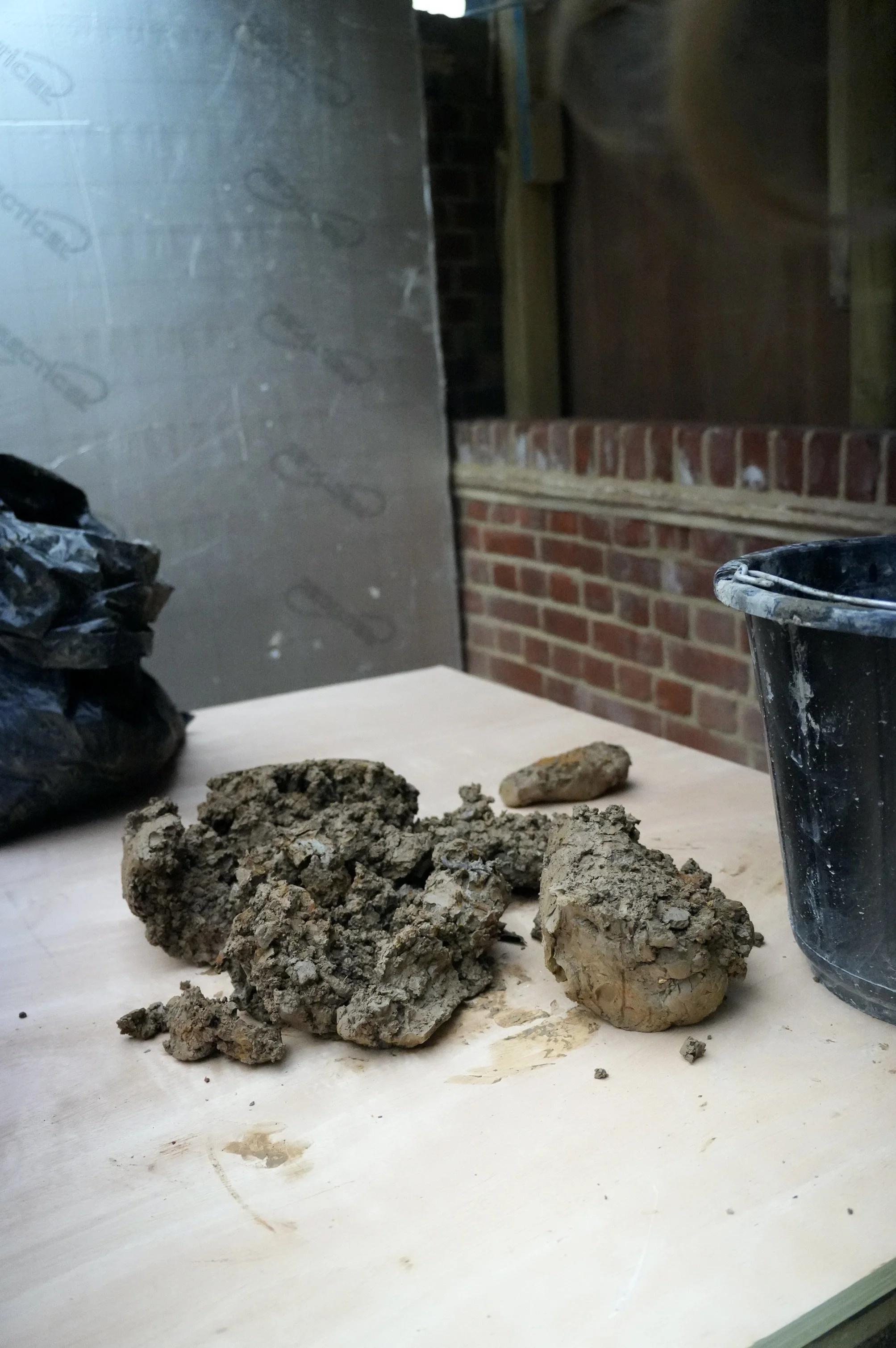
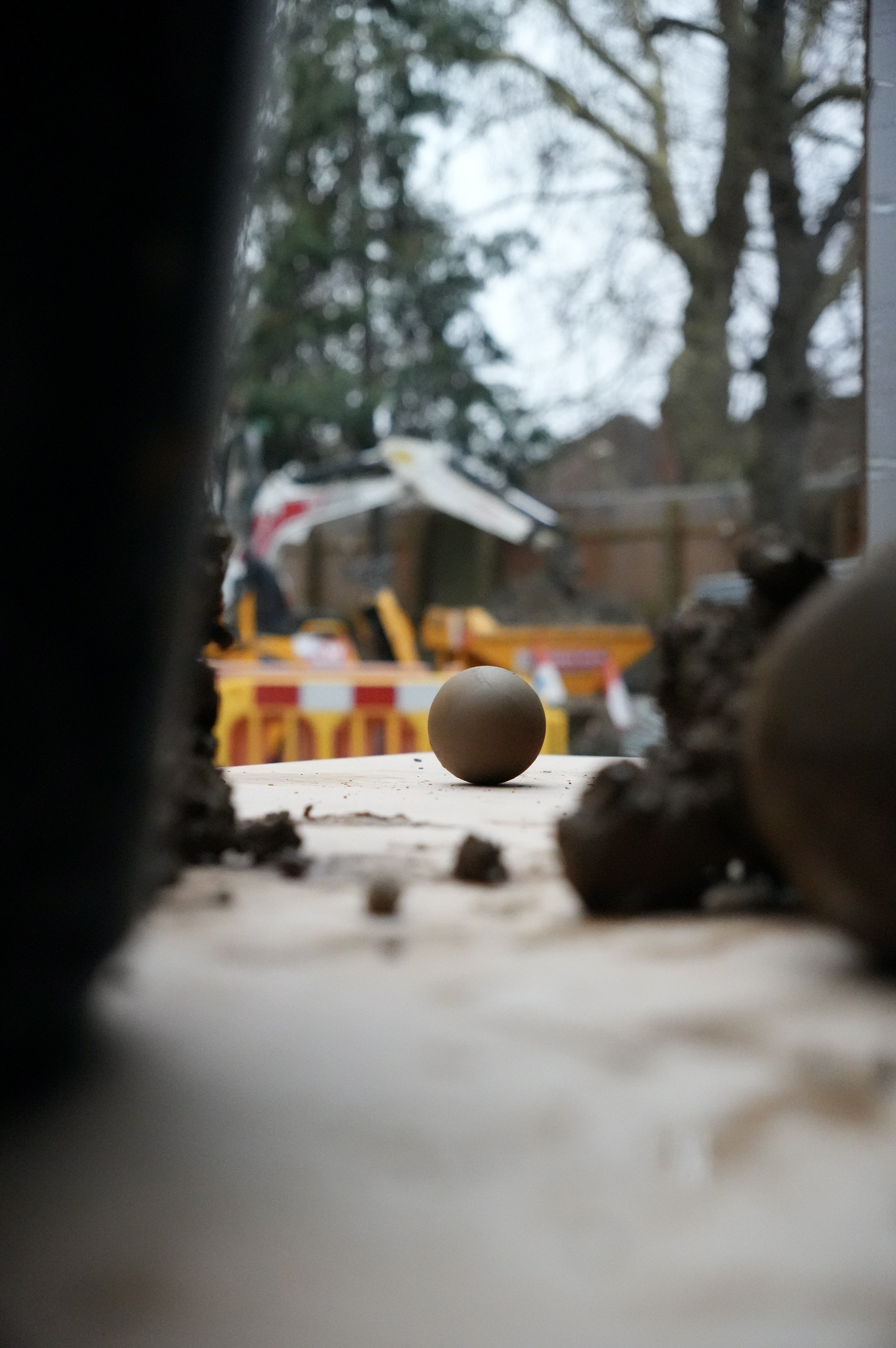
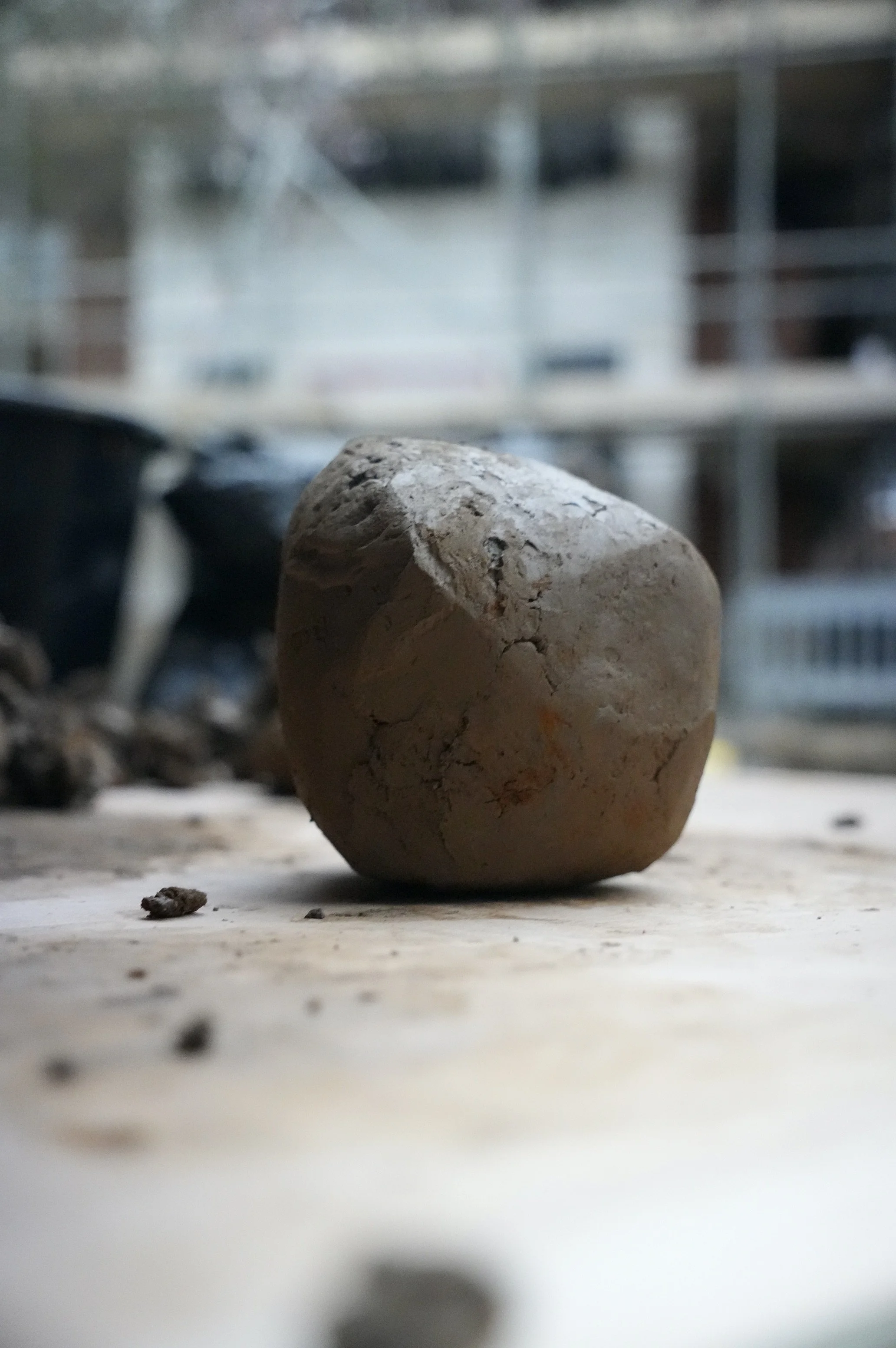
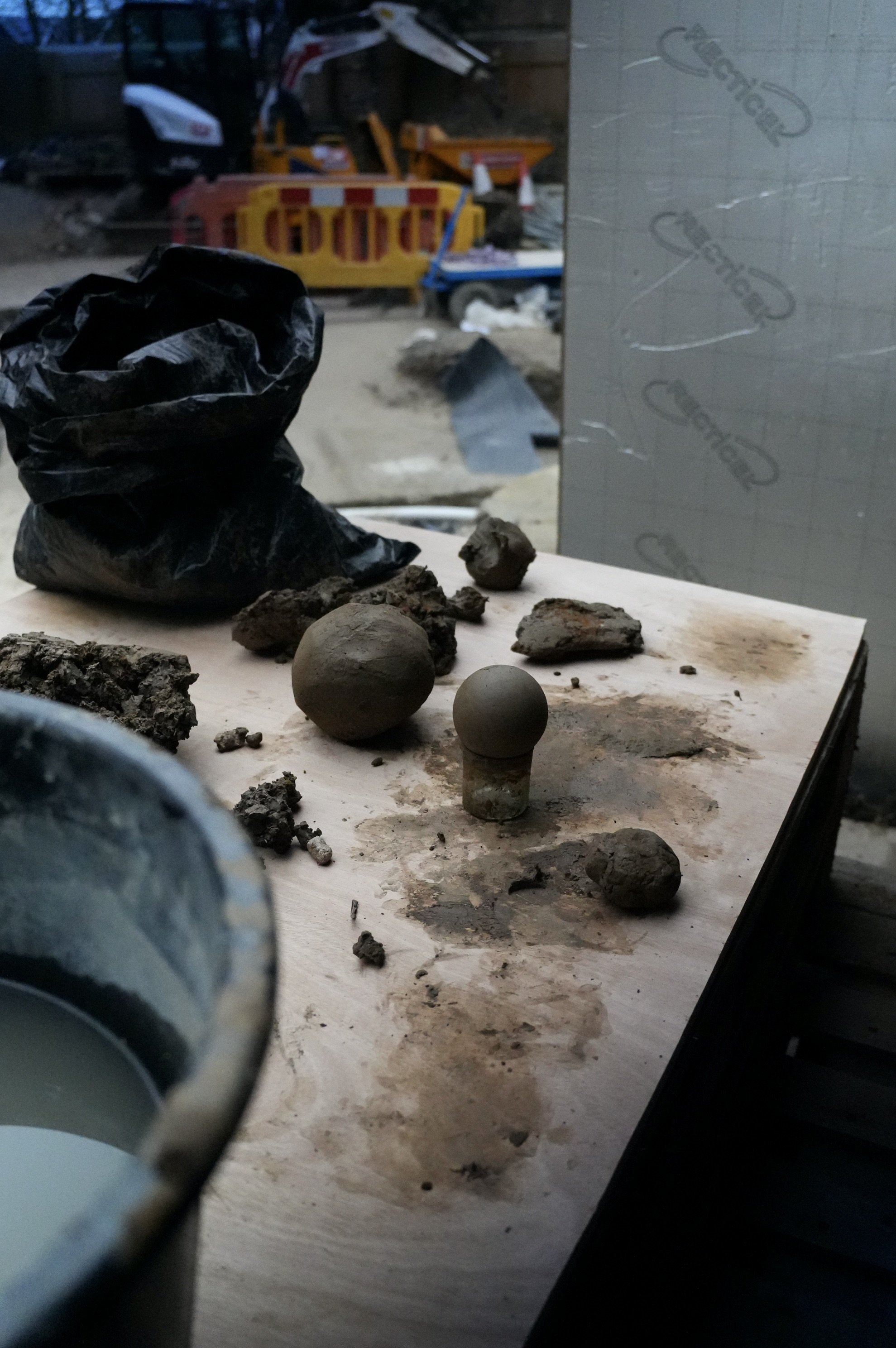
This ongoing residency with Golden Earth Studio explores the potential of excavated earth as a creative and site-responsive material. Golden Earth Studio works to divert clay and other soils from construction sites that would otherwise be sent to landfill, repositioning these materials as resources within artistic and architectural processes. Through this collaboration, I am developing a series of works using clay excavated directly from their building sites, responding to the material in relation to its geological origin, displacement, and new context.
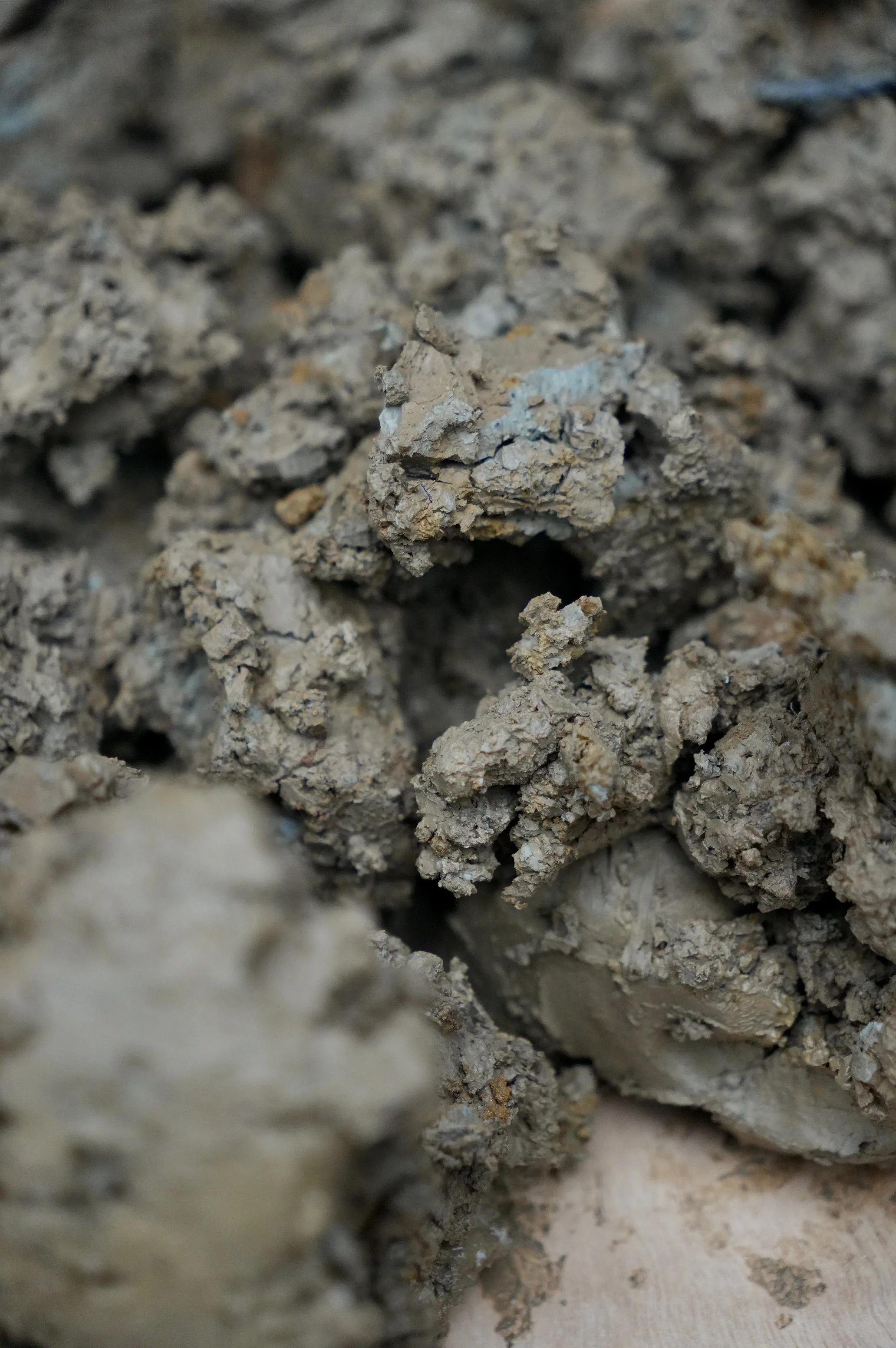
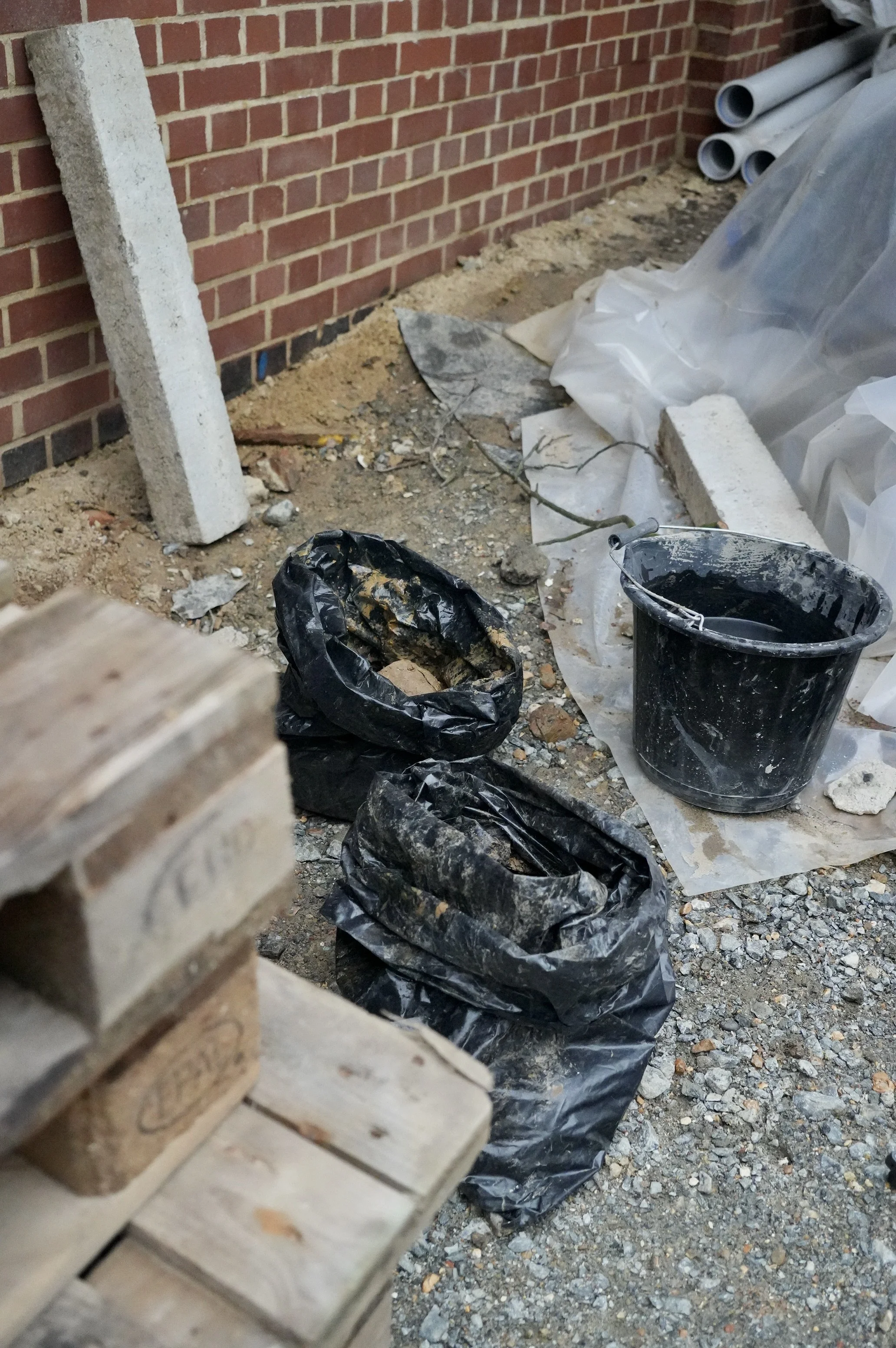
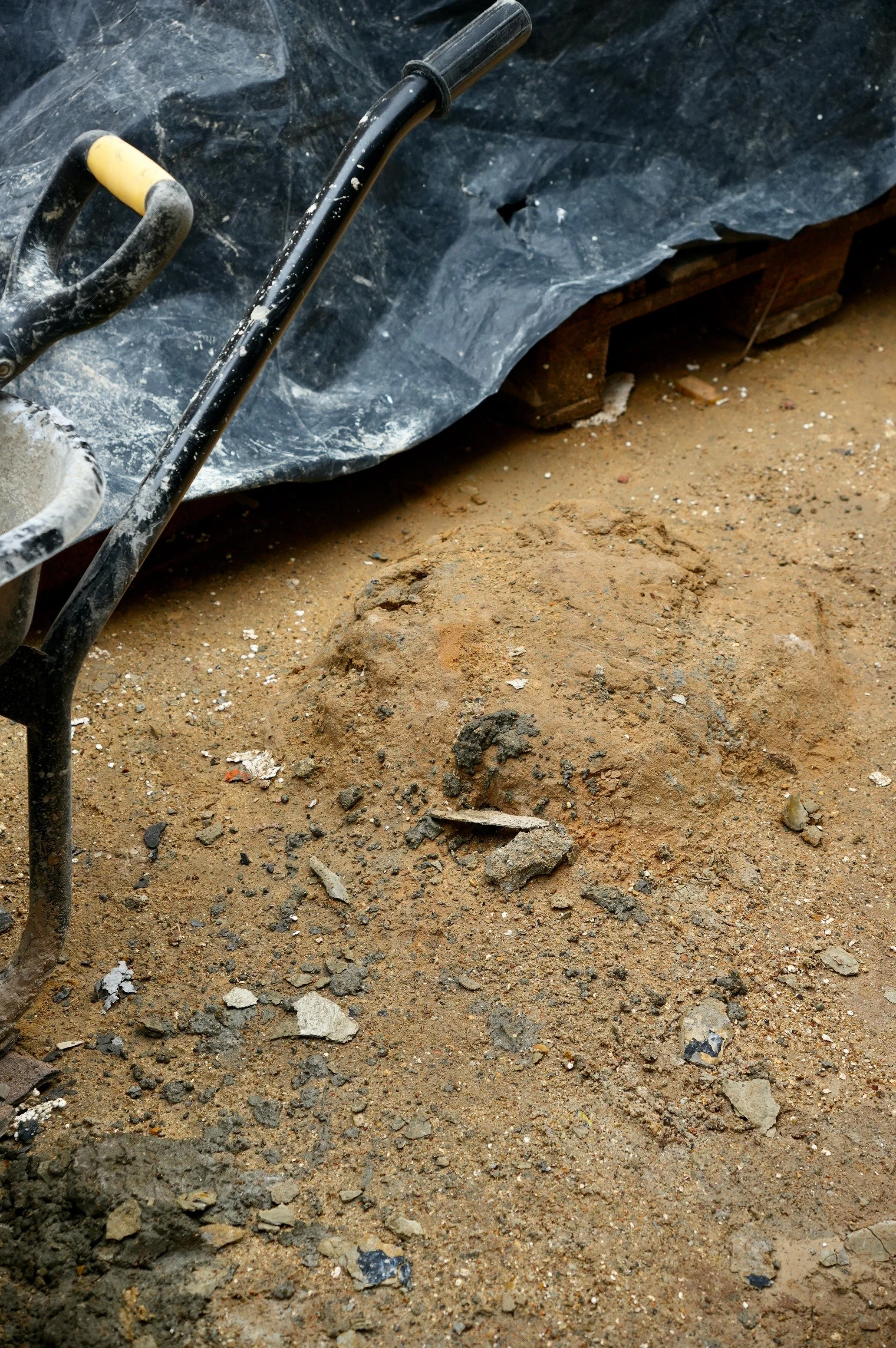
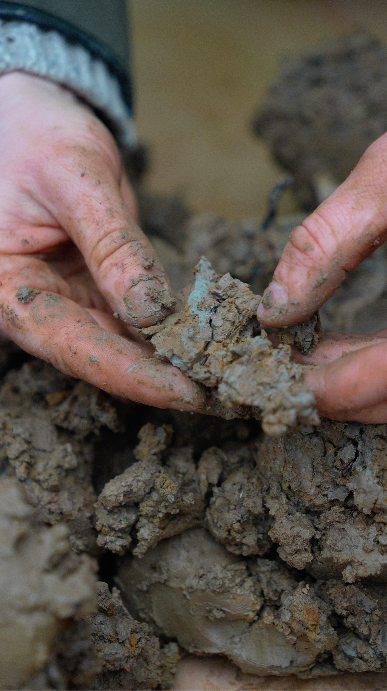
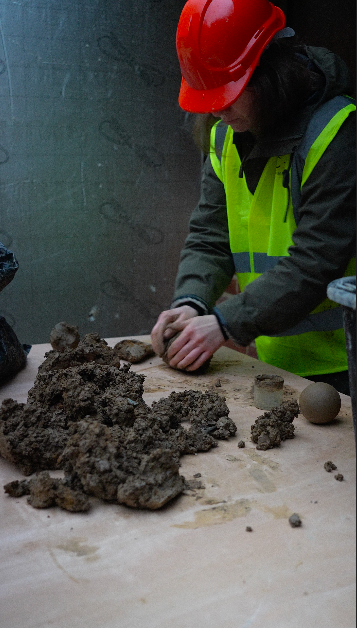
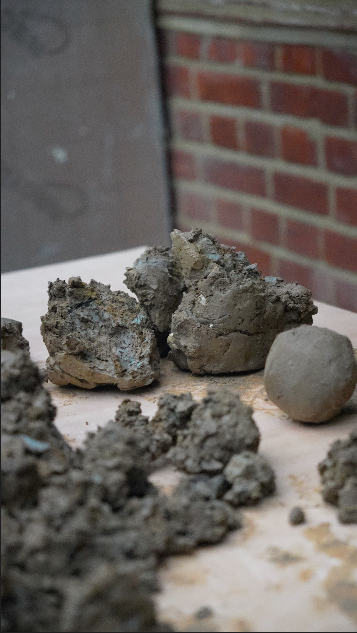
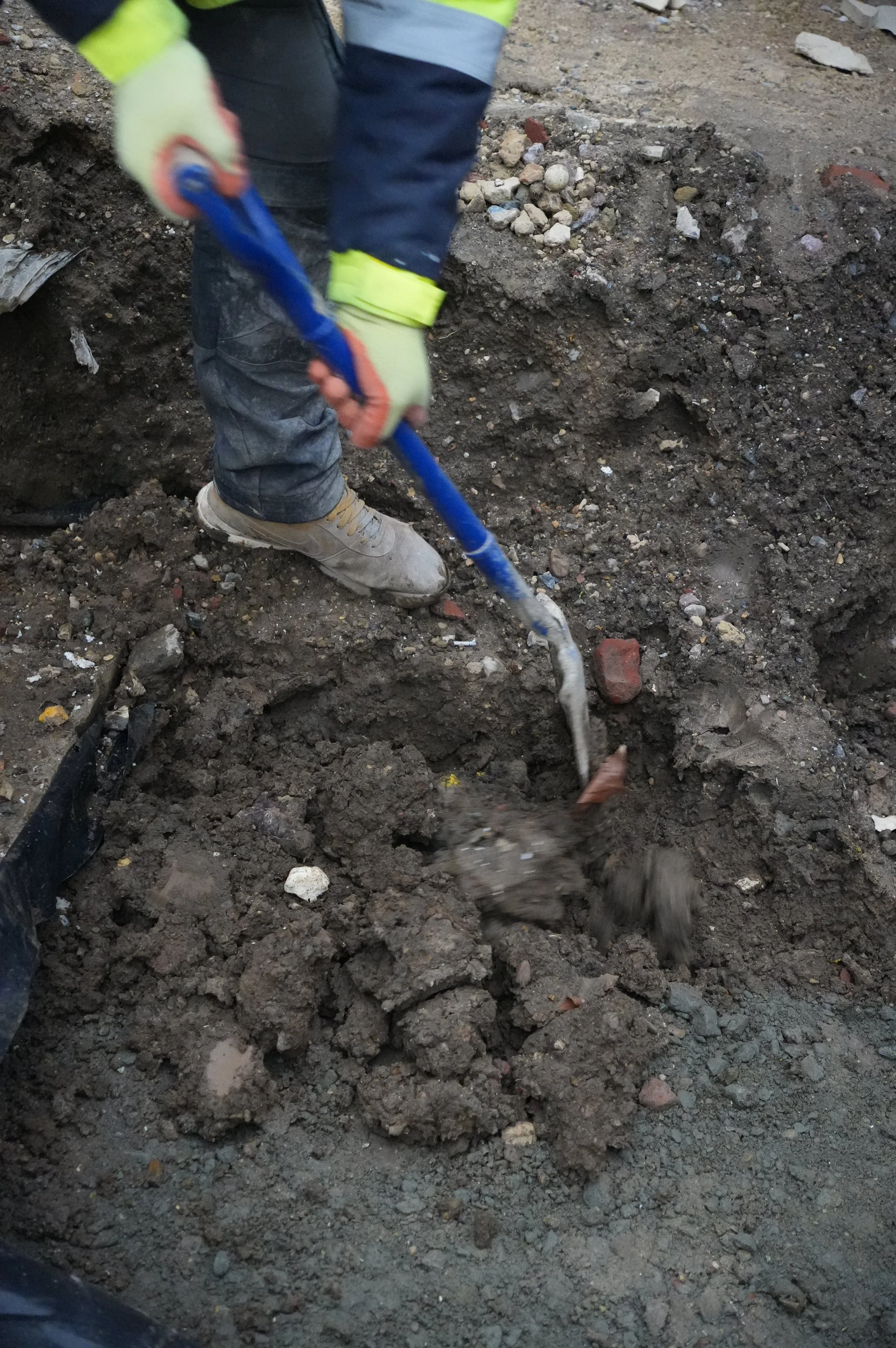
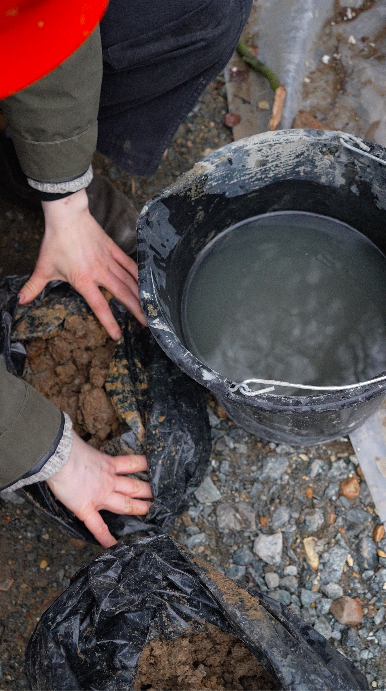
The research began on site, walking the excavation and studying the exposed stratigraphy to understand the clay within its geological setting. Samples were collected from different areas across the cut to examine variations in colour, density, and moisture. The material is London Clay, a marine clay deposited during the Eocene period (approximately 56–49 million years ago). It is iron-rich, typically brown to grey-brown, with distinctive blue-grey seams where the iron remains in a reduced state. When exposed to air these areas slowly oxidise, shifting towards reddish tones. The clay is highly plastic when wet, often sticky to work with, and shrinks and cracks during drying.
Working directly with this freshly excavated material raises questions around excavation, displacement, and value. Clay that has formed and settled over deep geological time is often removed rapidly during construction and classified as waste. Golden Earth Studio’s work challenges this cycle by retaining and redistributing excavated clay, allowing it to remain in circulation rather than entering landfill.
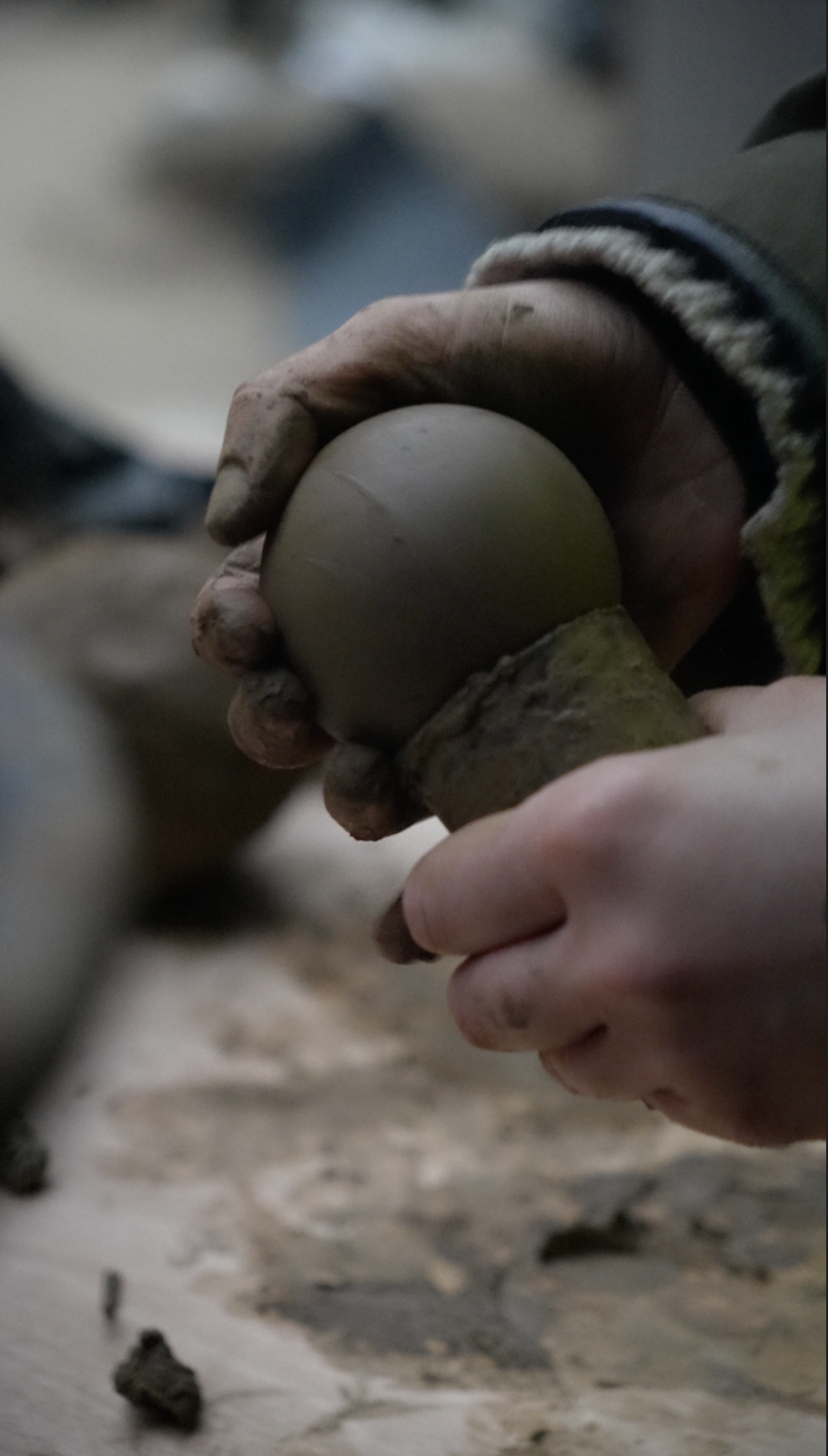
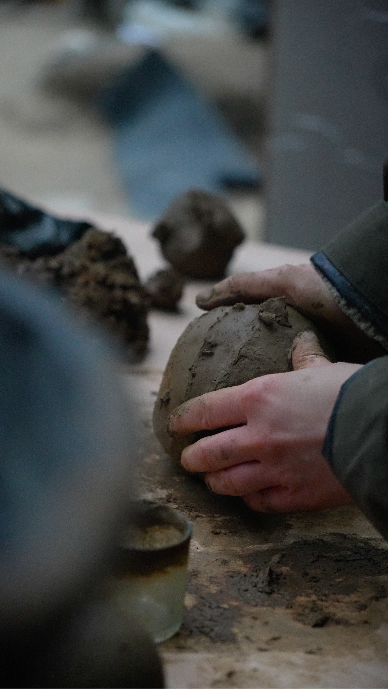
Initial stages of the residency involve material research and testing, both on site and in the studio, including assessing plasticity, drying behaviour, and structural response. This process will inform the development of site-responsive works that will continue to be shaped in relation to the excavation itself, maintaining a dialogue between the material, the site where it was formed, and the contemporary moment in which it has been revealed.