FRAGMENTS
The coastline, inland hills, and industrial remnants became places where I could inhabit the environment on my own terms, moving slowly, observing, and responding intuitively. This embodied engagement is central to the research: photography, like clay and thread, allows me to hold fleeting sensations and translate them into material forms that carry both ecological and personal knowledge.
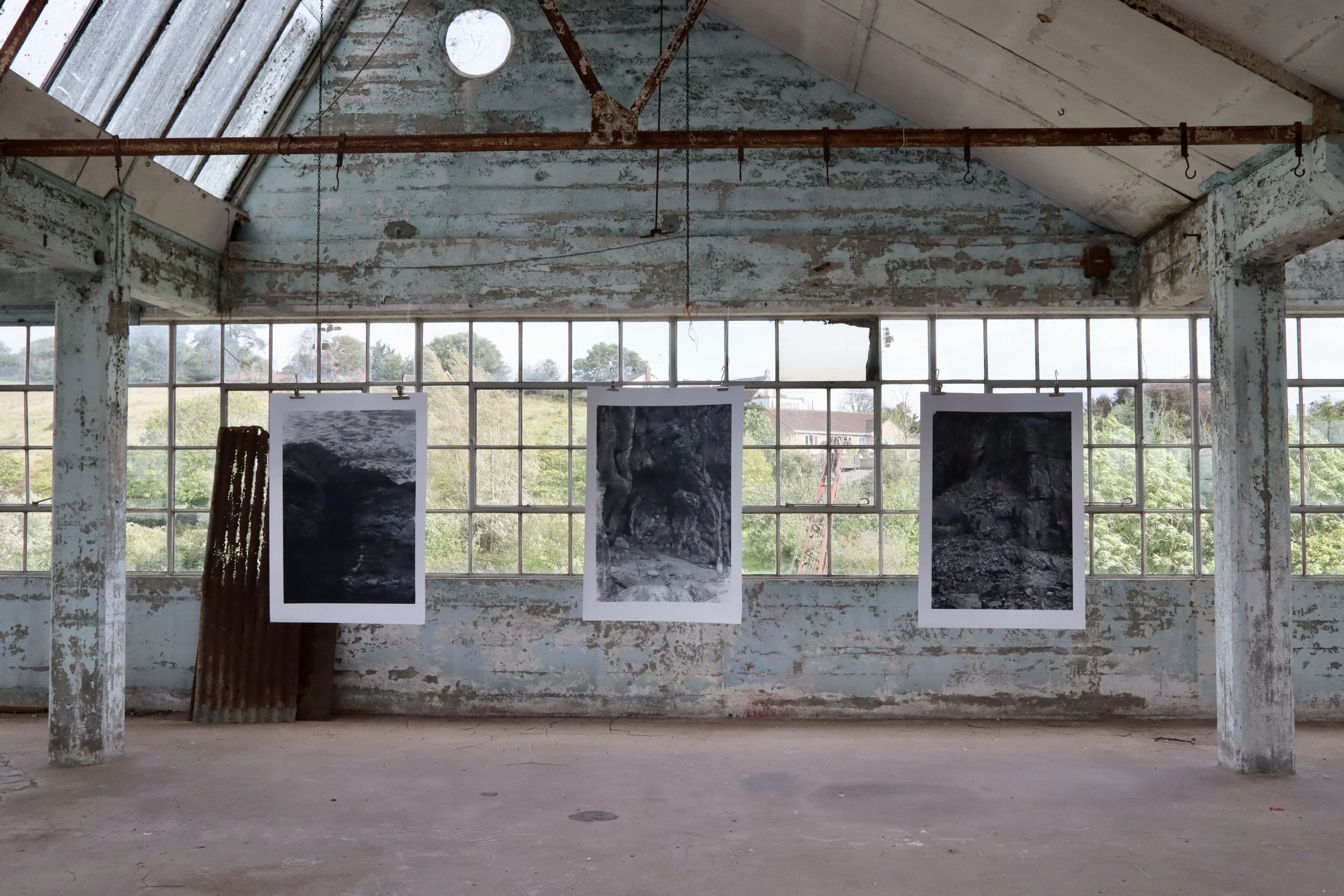
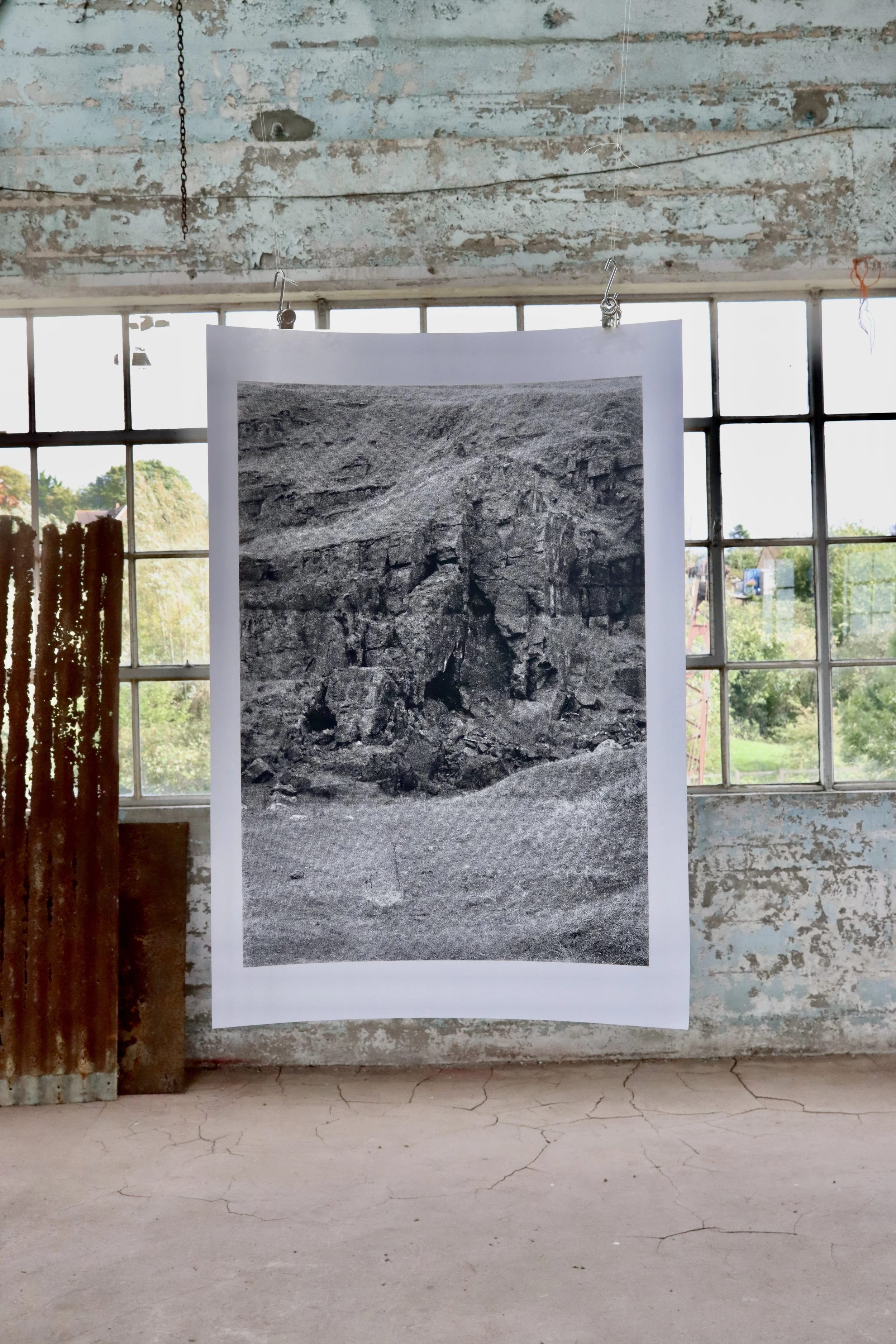
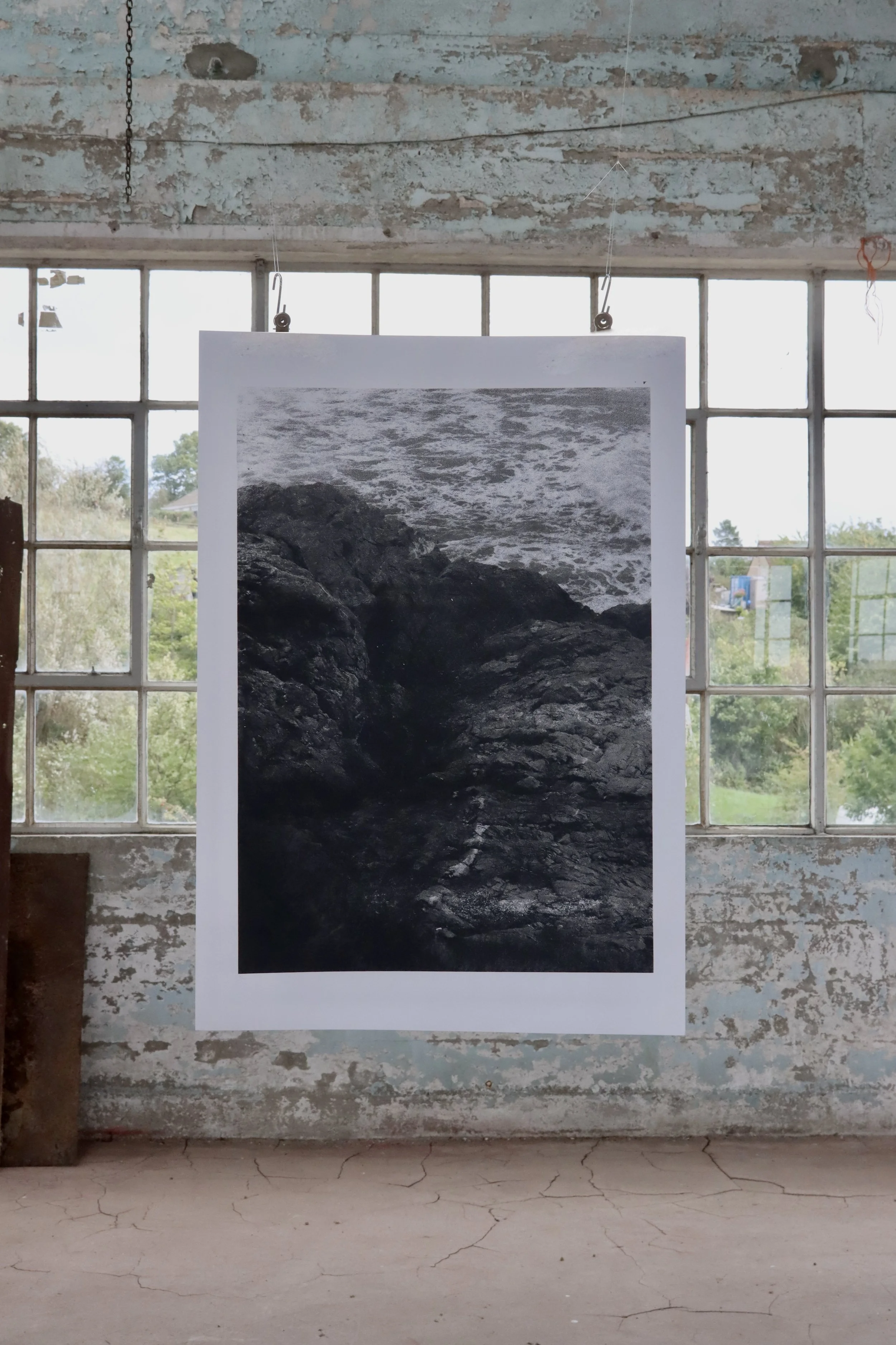
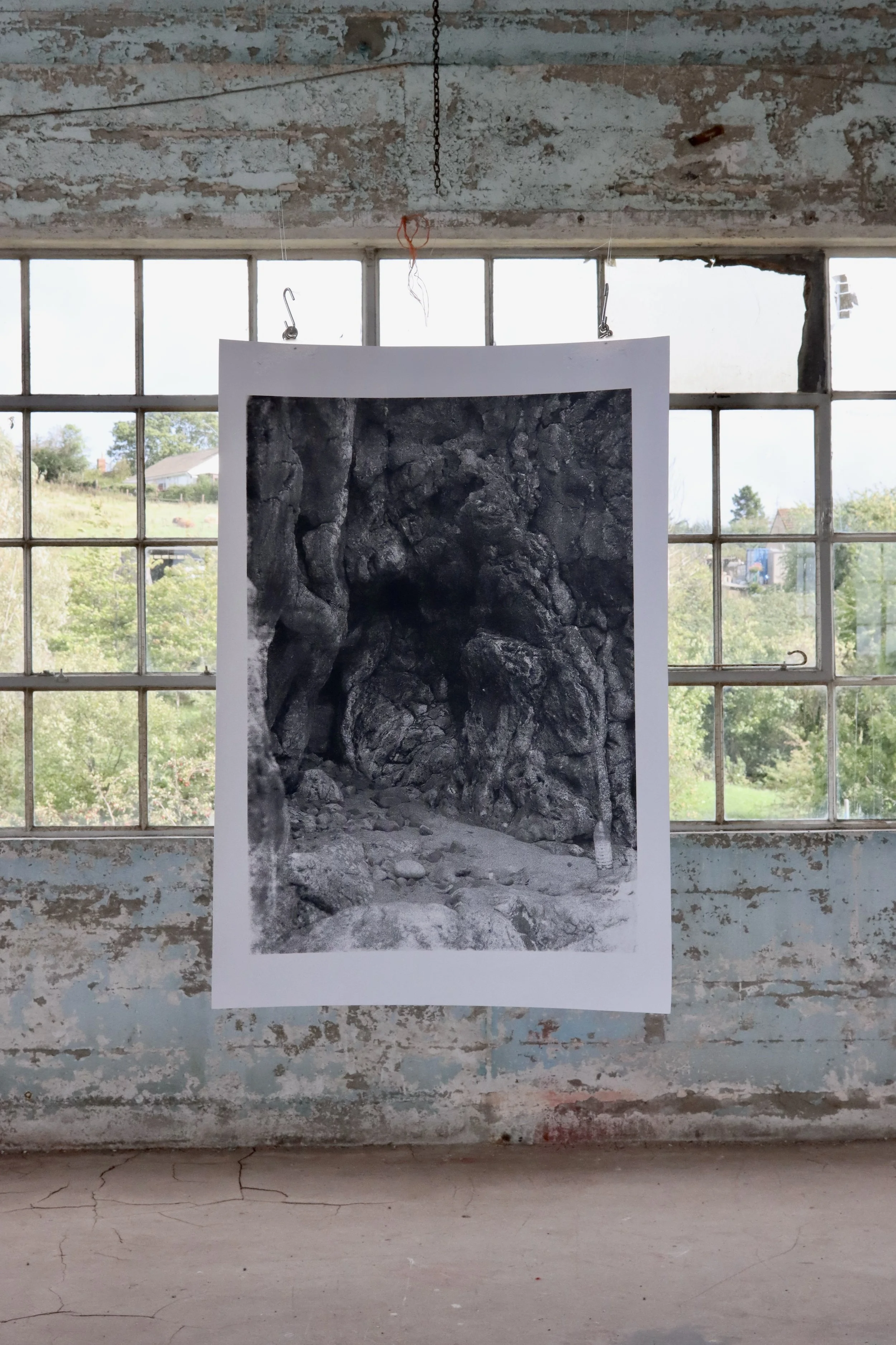
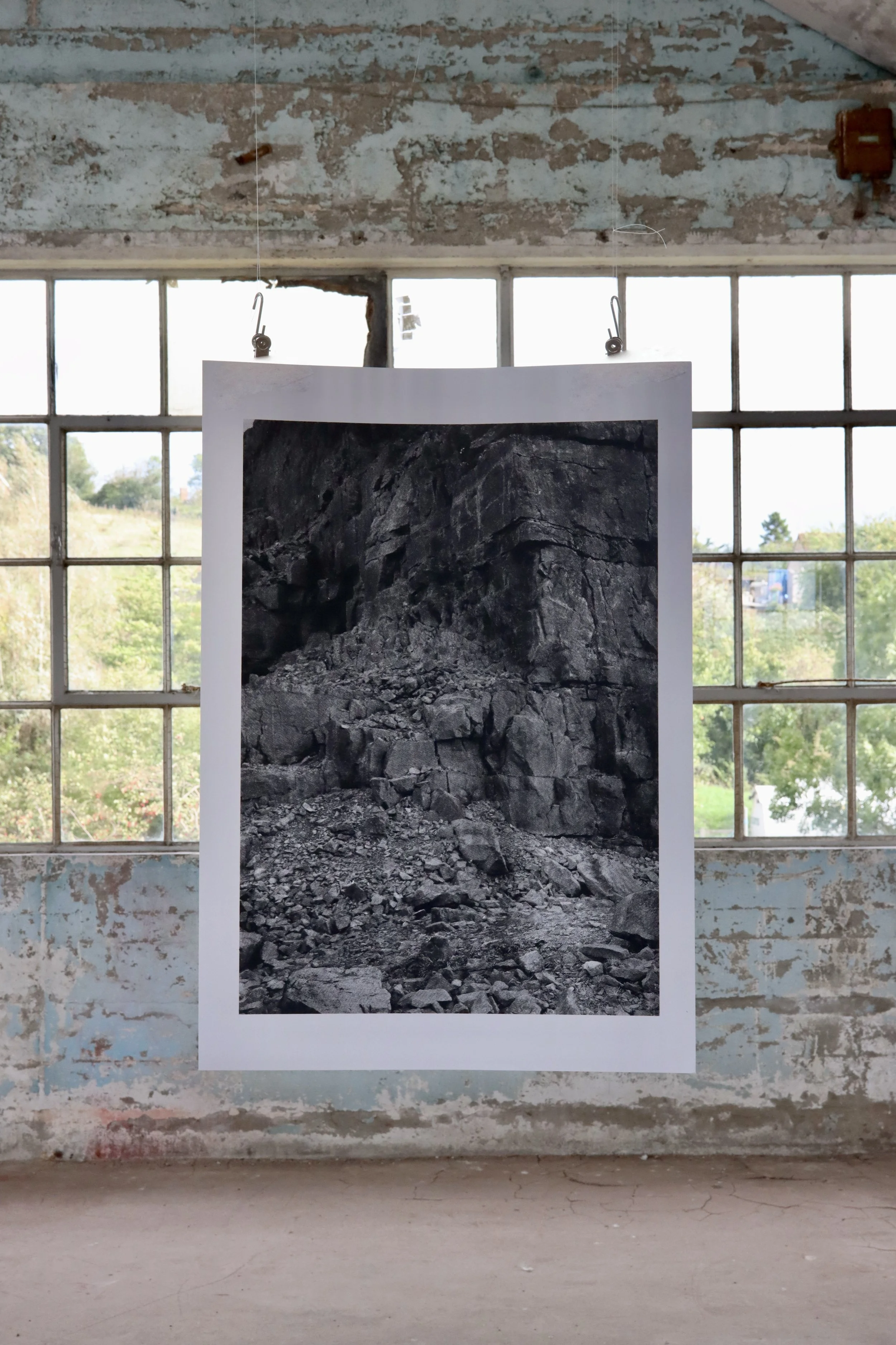
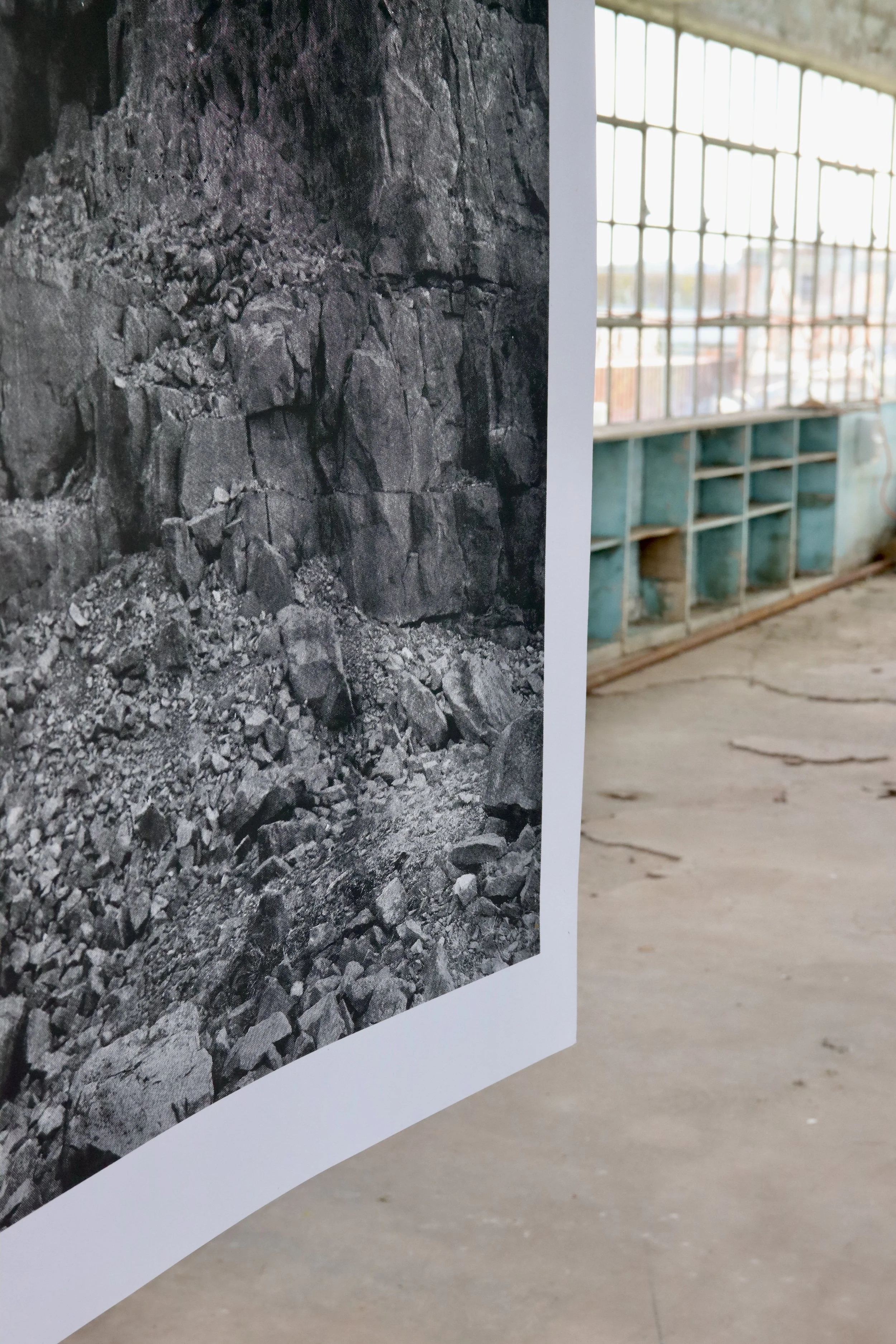
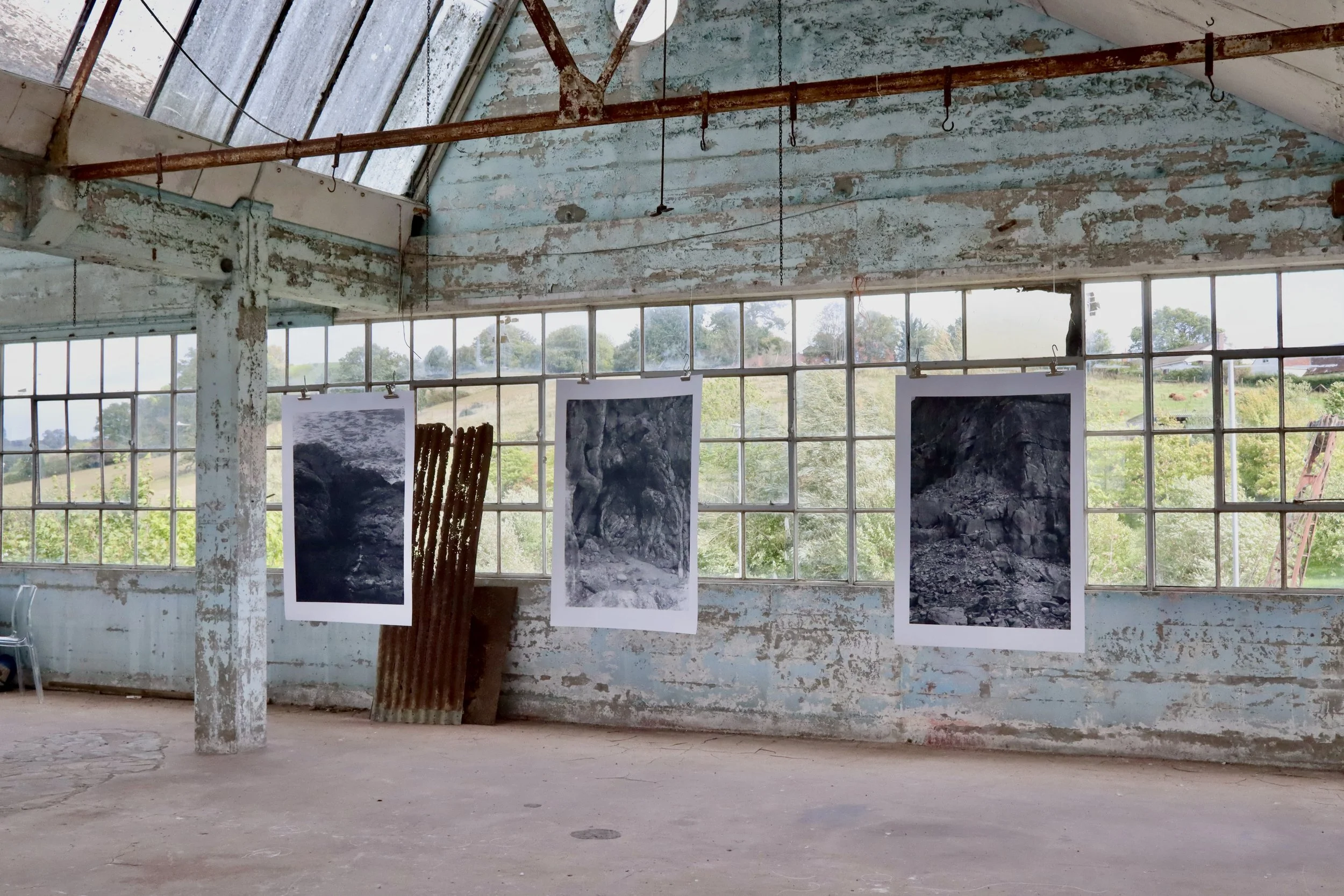
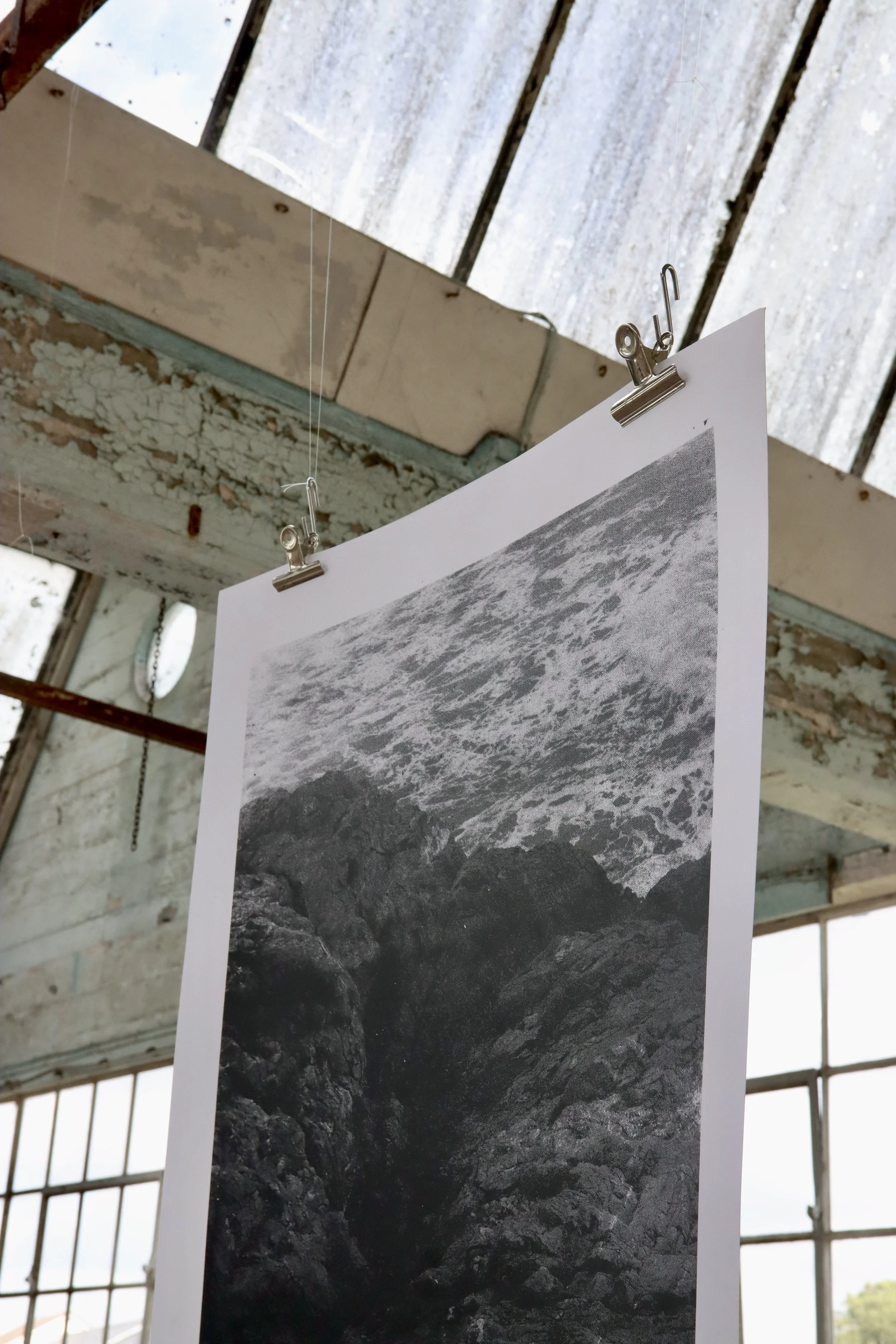
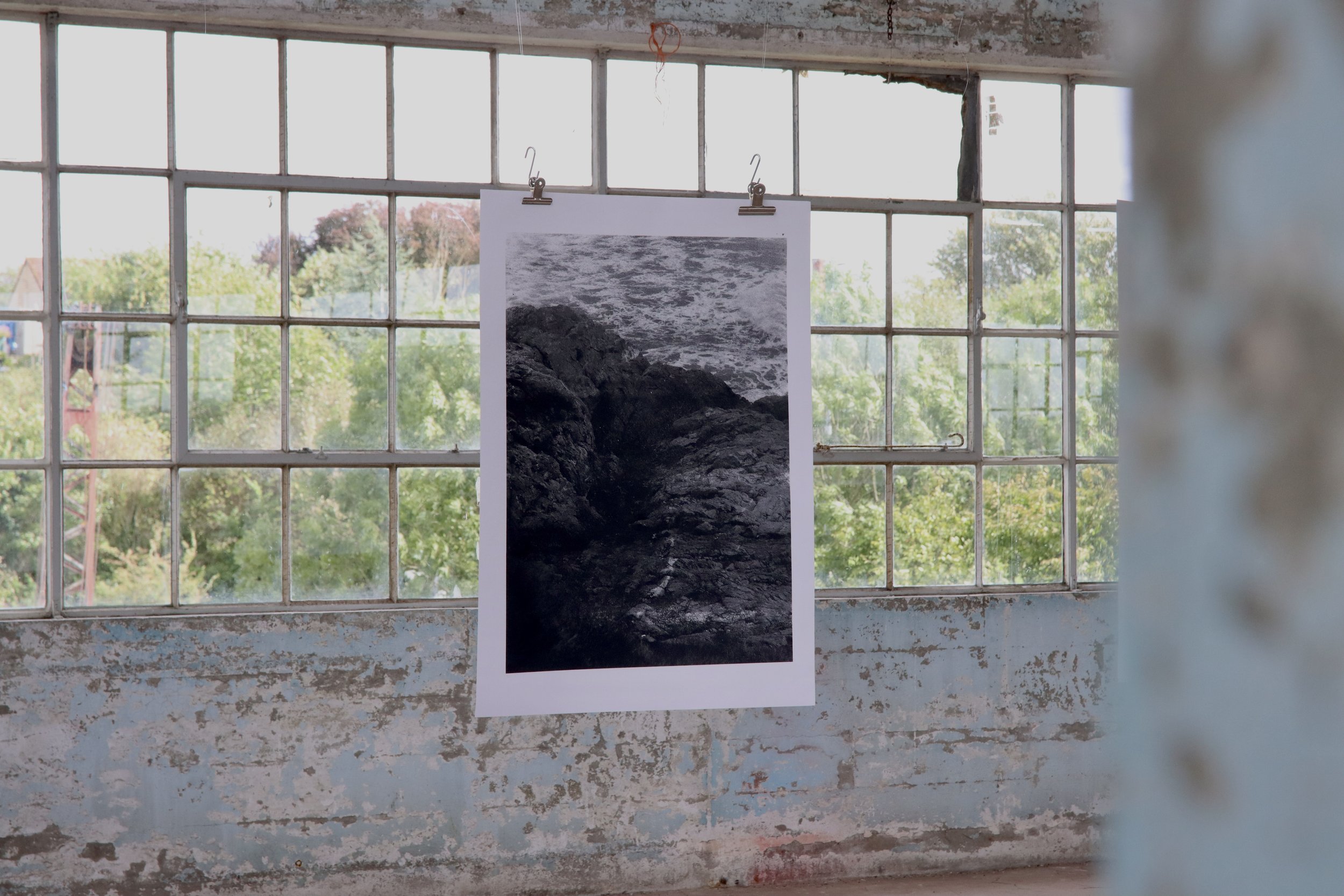
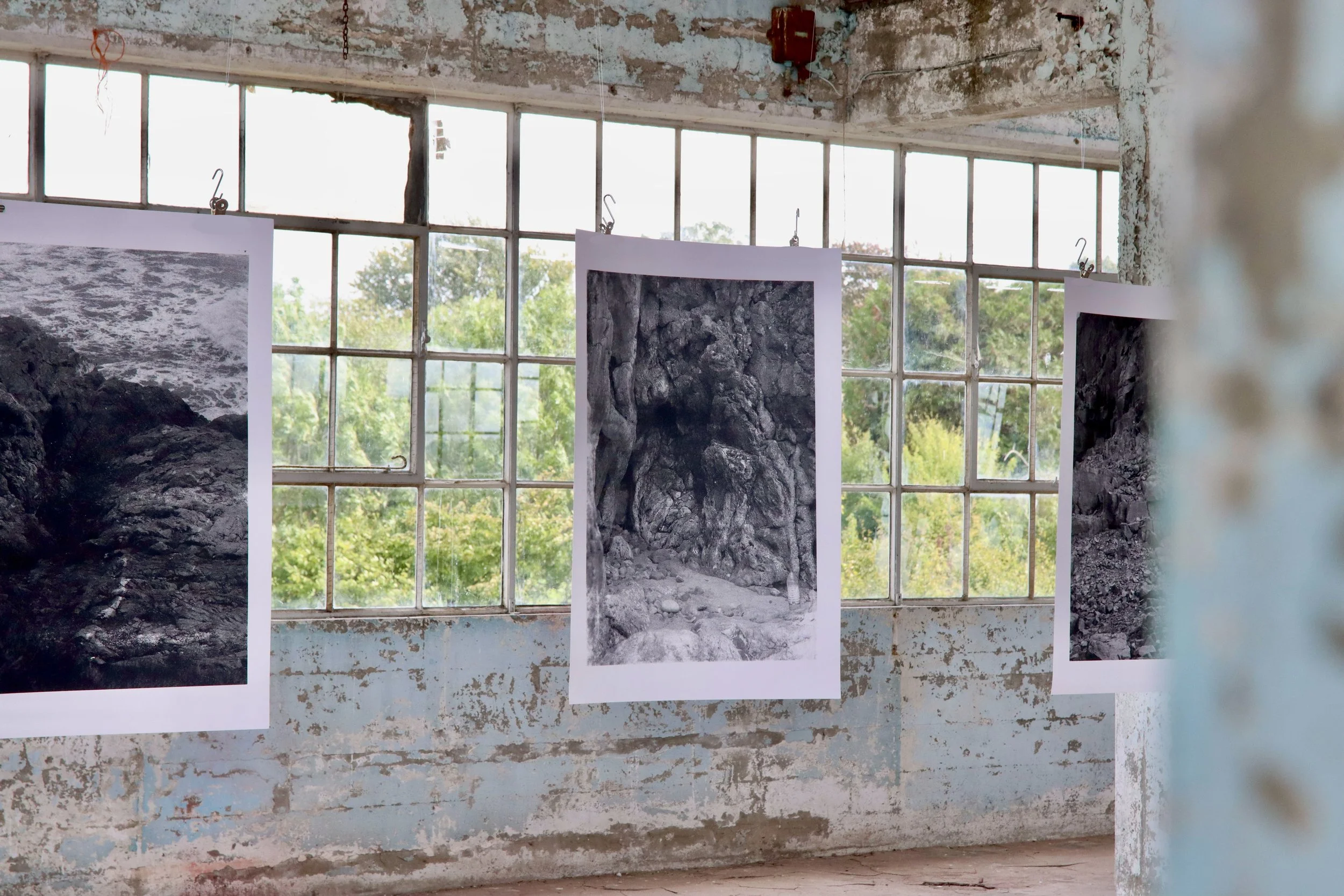
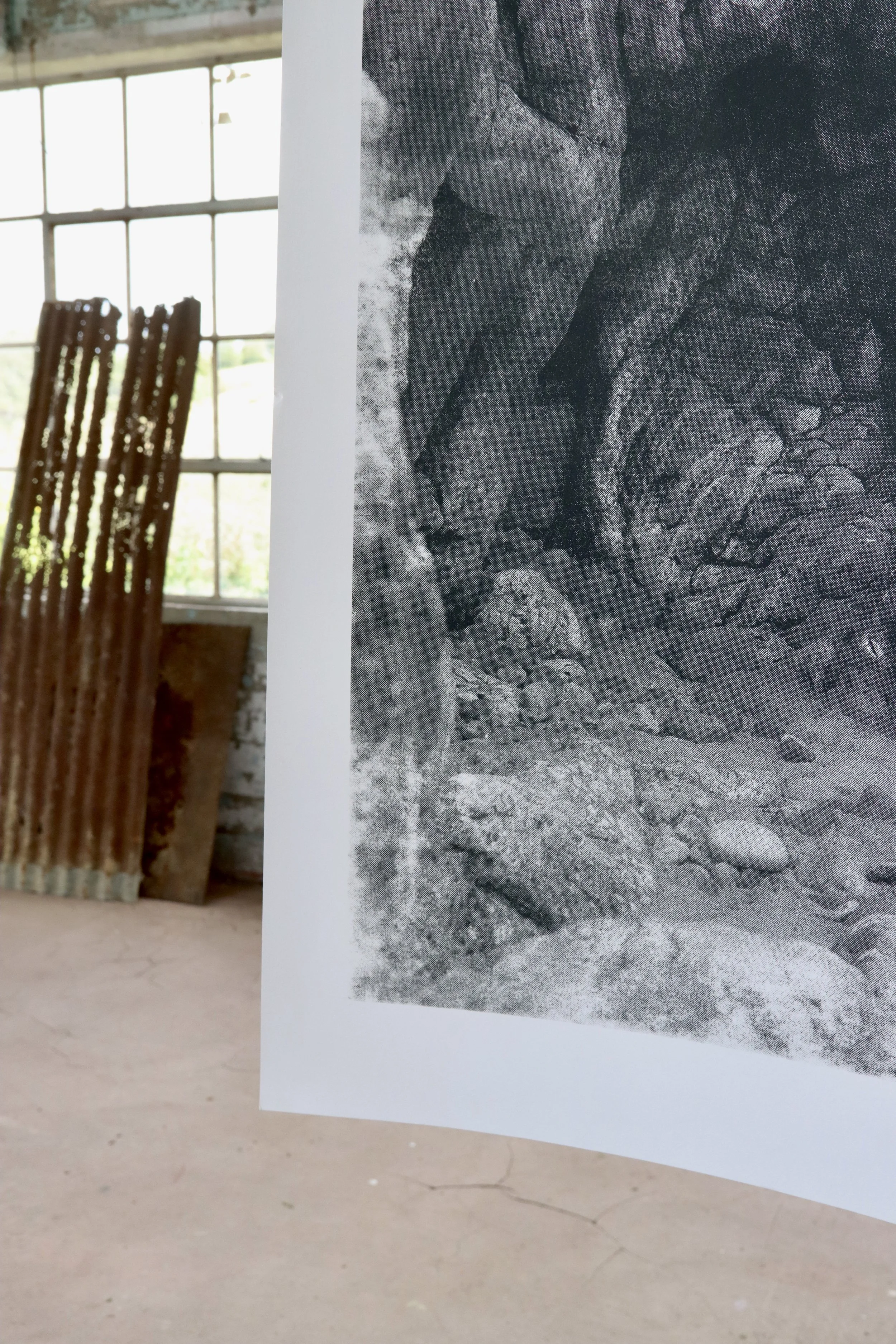
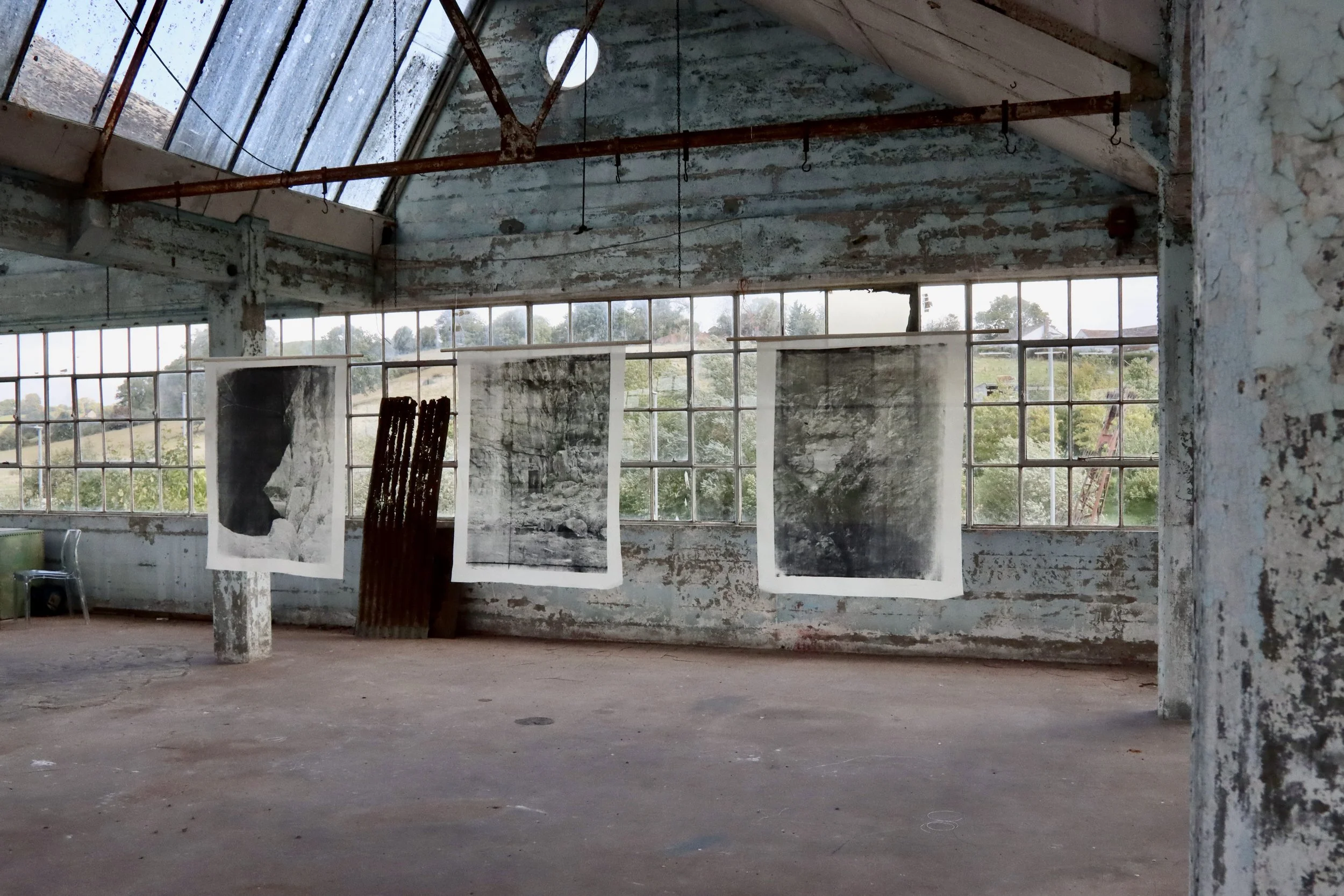
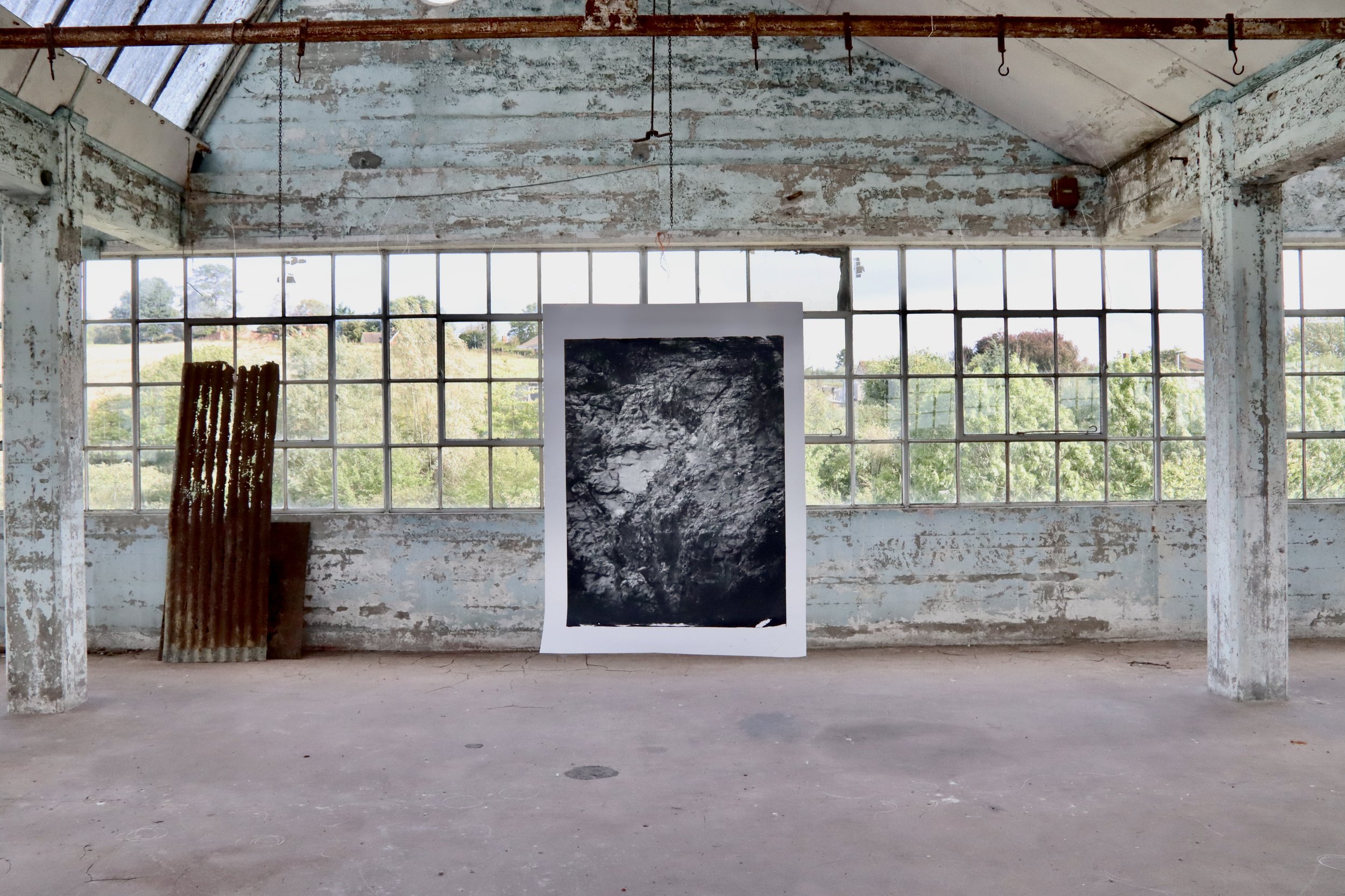
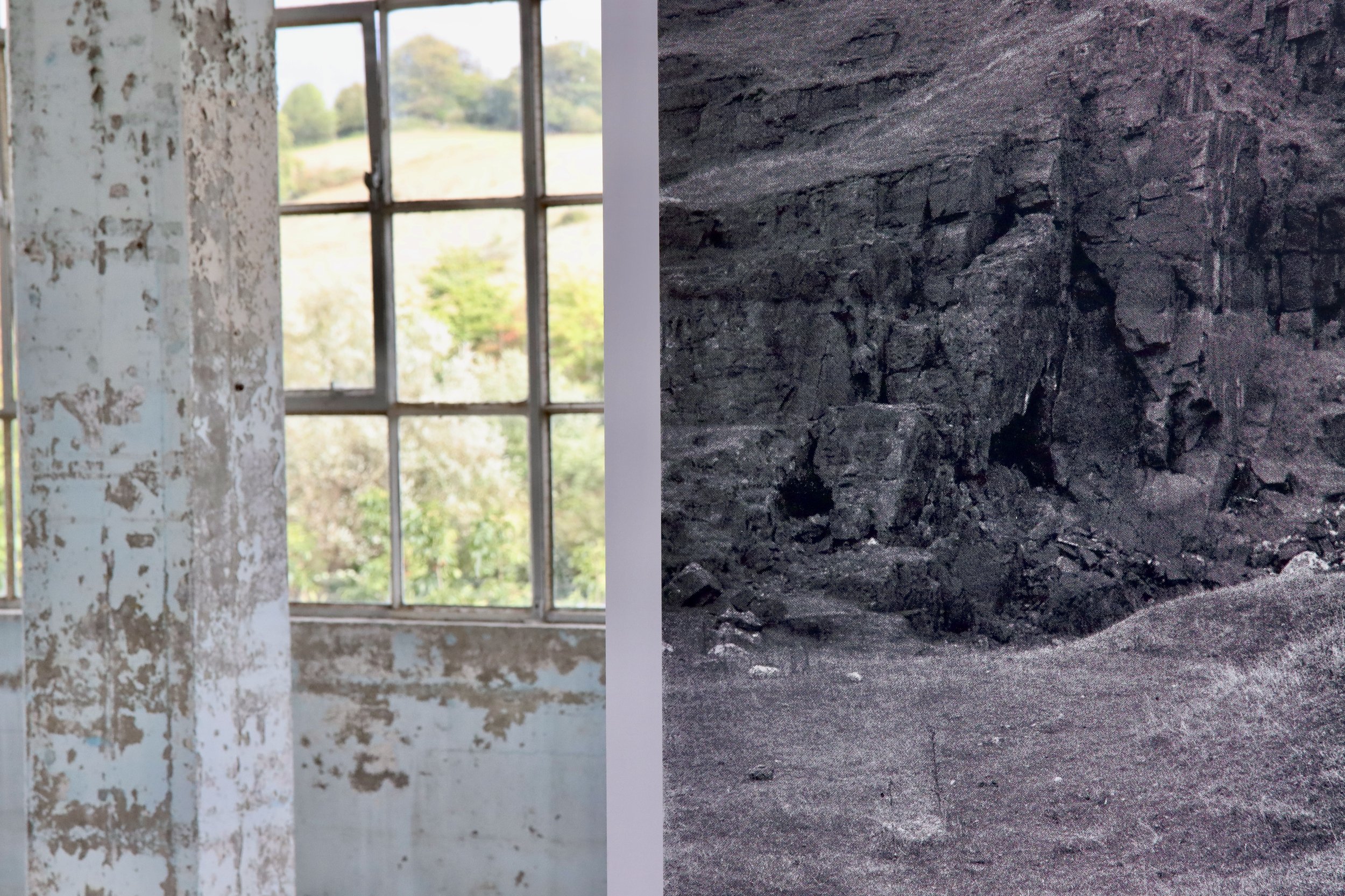
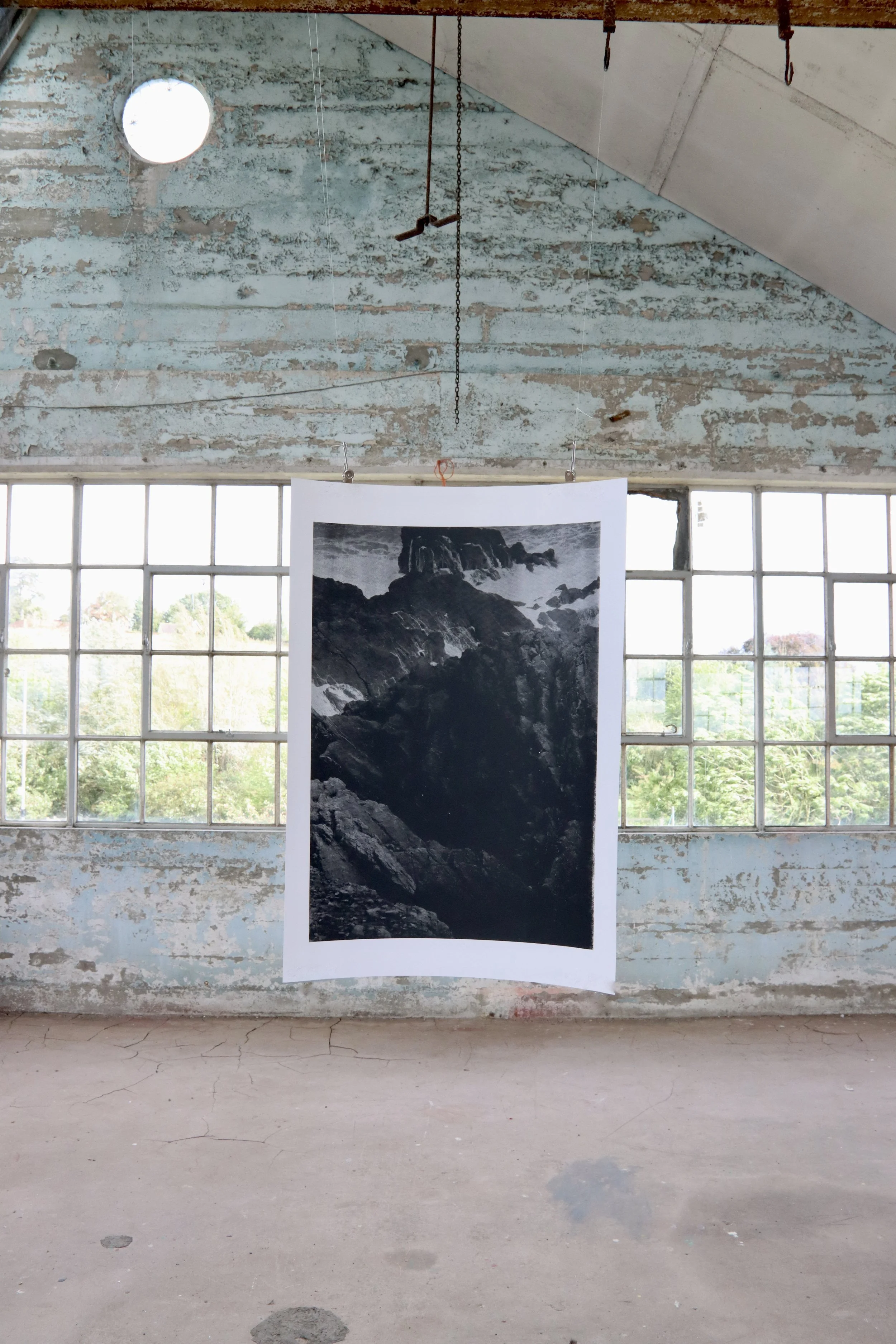
The work was developed using analogue processes, including hand-processed cyanotypes and seaweed-based developers, connecting the photographic material directly to the environment depicted. Images are created intuitively, guided by texture, light, and rhythm rather than narrative. Shadows across rock faces, rusted metal, shifting shorelines, and quiet inland paths are gestures toward understanding landscape as alive, layered, and in motion.
Fragments explores presence and absence, human and non-human histories, and the persistence of labour and memory in land. It is a study in how landscapes shaped by extraction and erosion retain traces of past activity while continuing to evolve. The project demonstrates how slow, sensory research, responsive to place and neurodivergent ways of being, can generate knowledge that exists between record, material engagement, and embodied reflection. The resulting body of work forms an archive of place: a meditation on belonging, resilience, and the ongoing dialogue between land, material, and self.
Fragments is a research-based photographic project developed during my Freelands Foundation Studio Fellowship at Swansea College of Art. Rooted in place, material, and memory, it investigates the interface between landscape, identity, and embodiment through sustainable analogue photographic processes. The project forms both a companion to my solo exhibition and a method of research, exploring how landscapes carry history, material traces, and ecological knowledge.
Over the course of the fellowship, I worked through slow, immersive engagement with the South Wales landscape. Walking, swimming, and site-specific making became methods of enquiry, enabling me to listen to the land and observe its rhythms. I focused on coastal edges, tidal zones, inland hills, weathered terraces, and sites shaped by industry, including abandoned quarries, slag heaps, and collapsing tramways. These environments, shaped by both human labour and natural forces, became sites to explore how memory, time, and material trace coexist.
As a neurodivergent individual, I often move at a different rhythm from the world around me, and these landscapes offered a space where that rhythm felt welcome.
A solo exhibition and research-led photographic project exploring landscape, material memory, and embodied ecological knowledge through sustainable analogue processes.
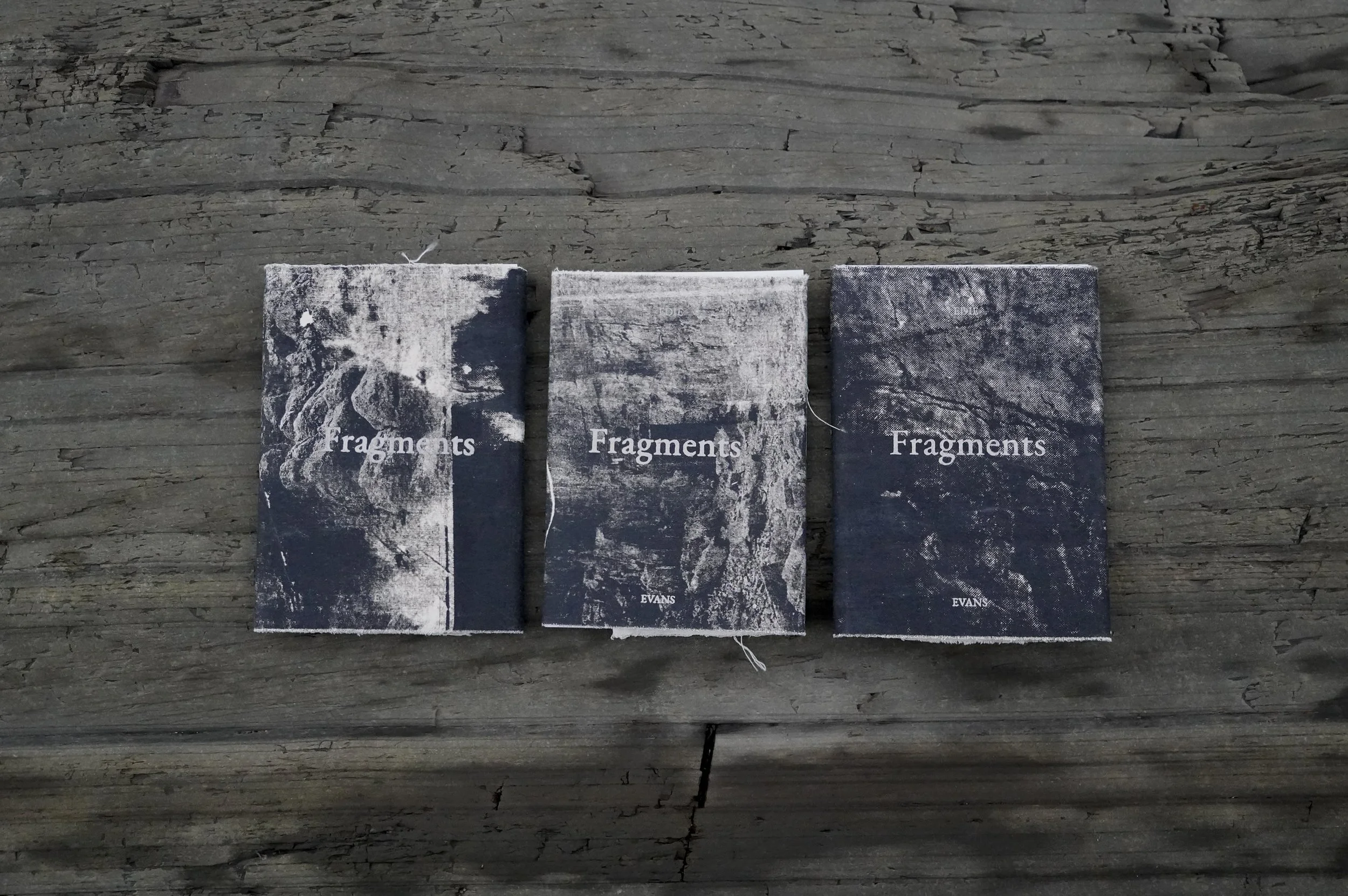
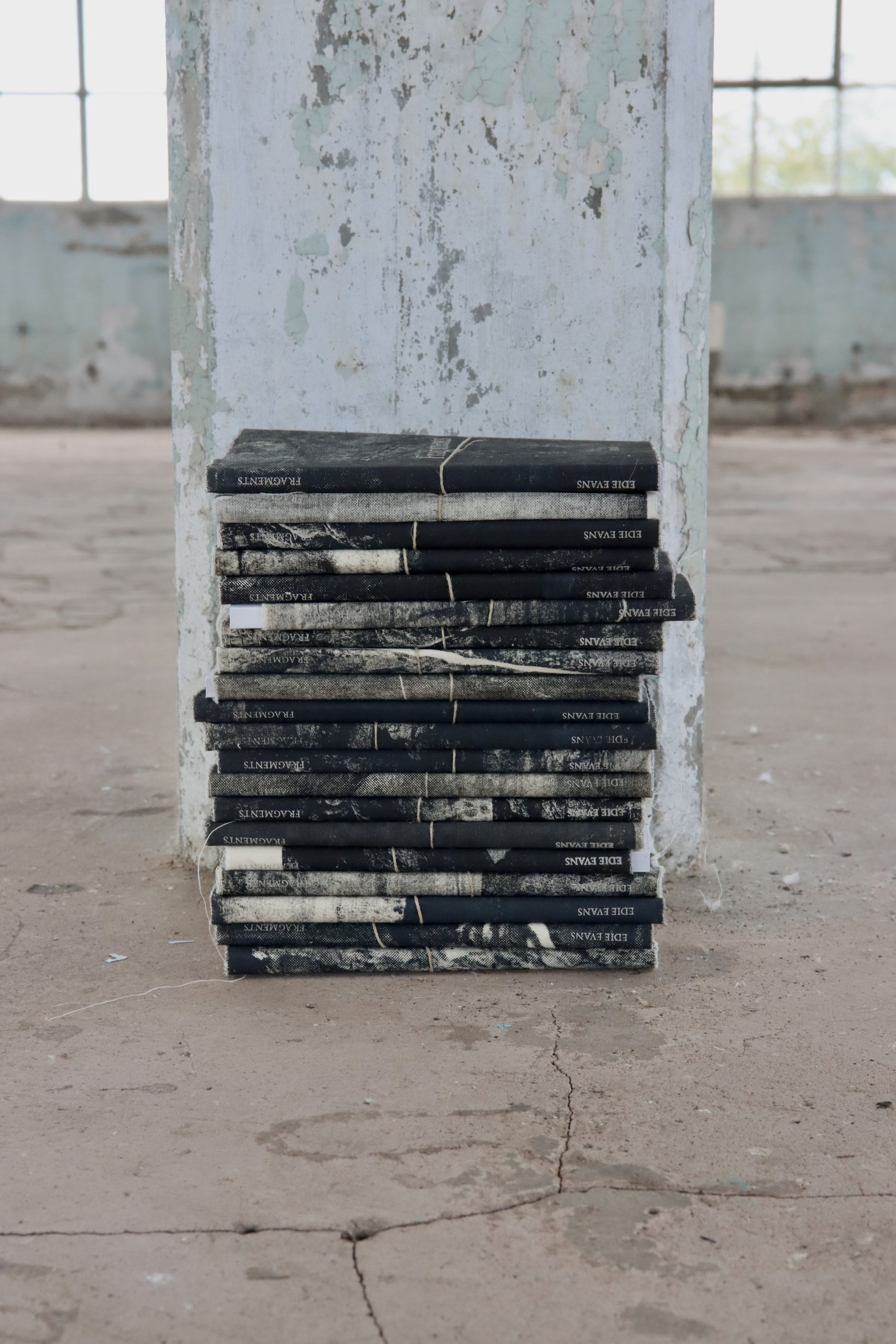
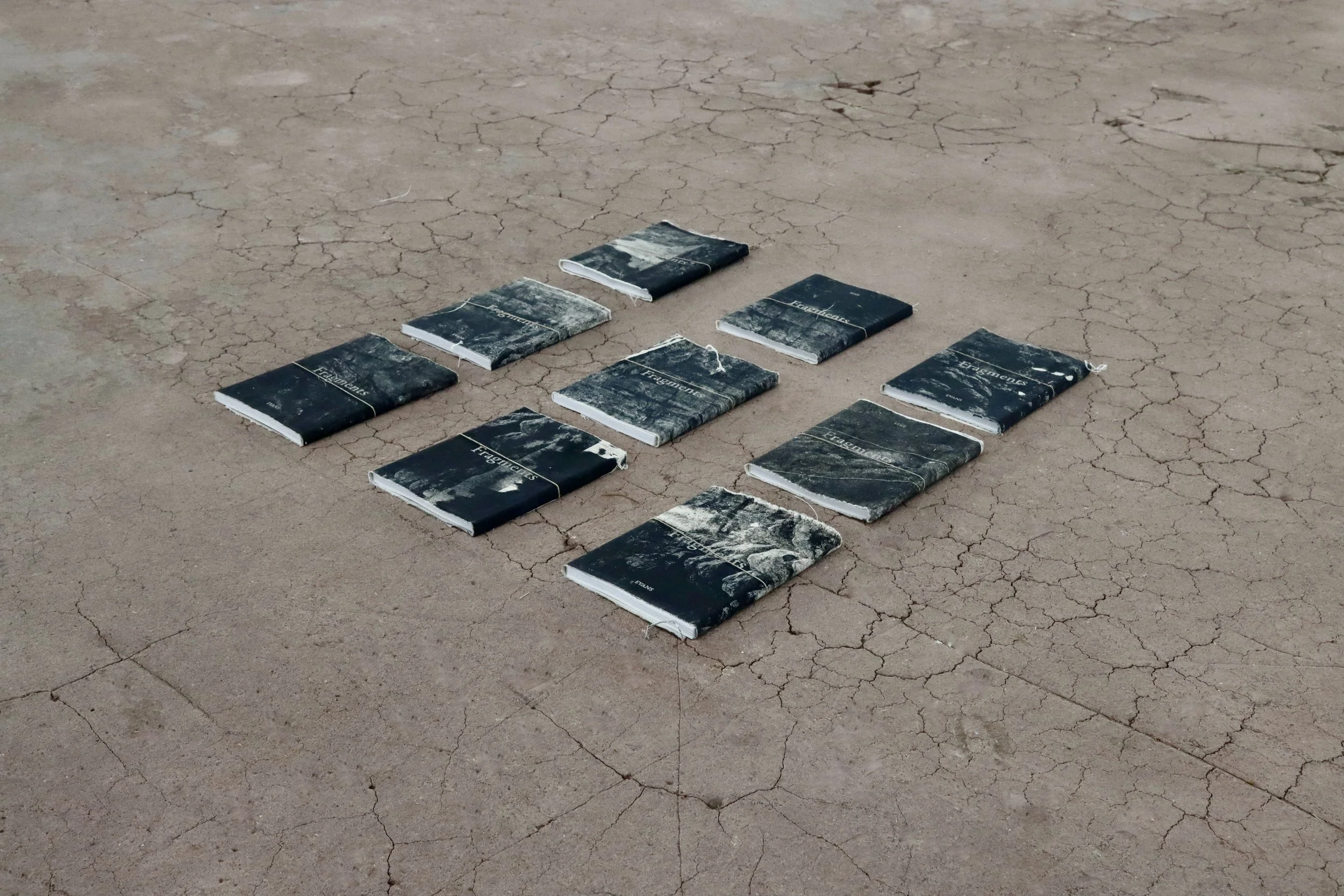
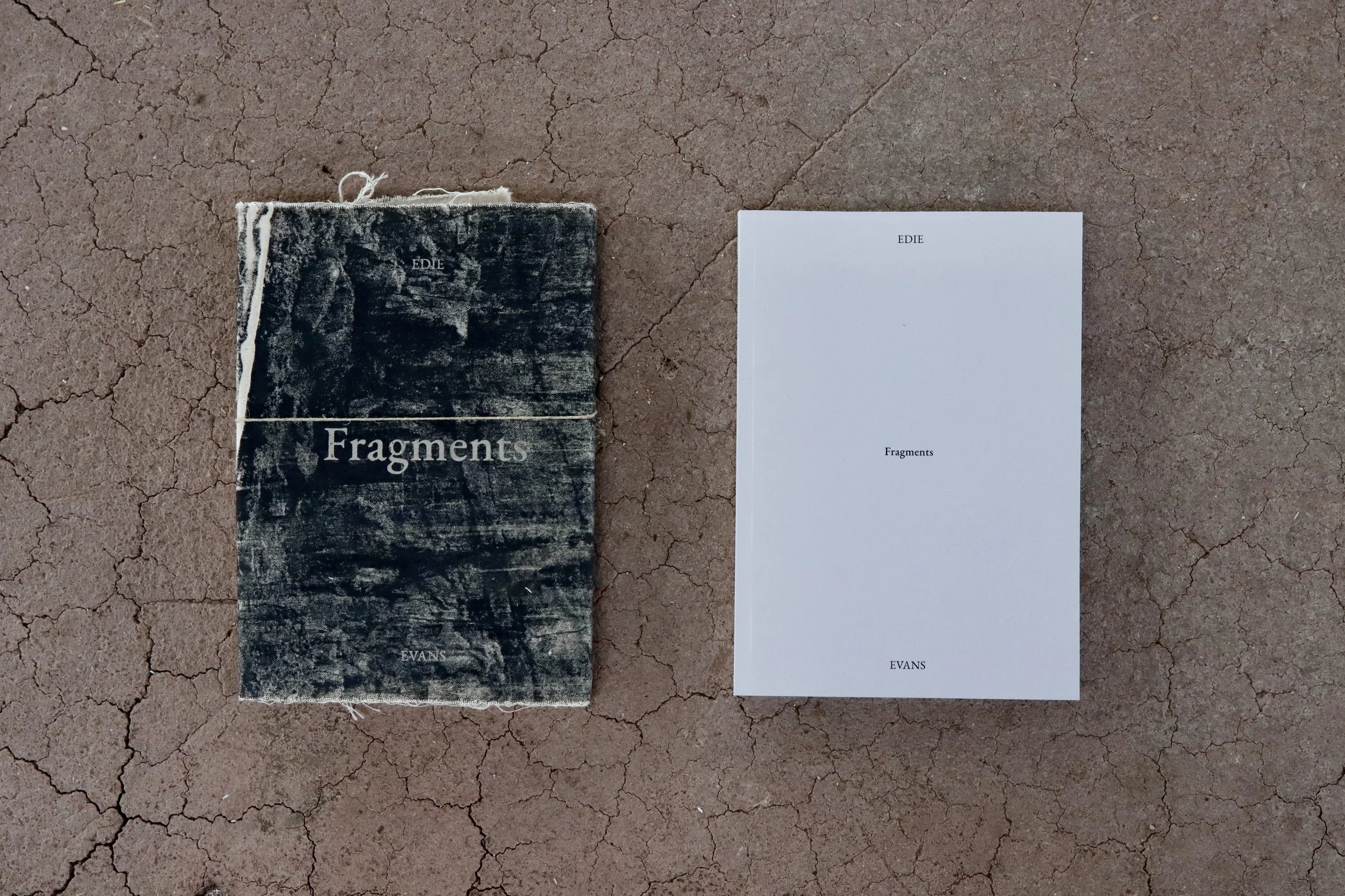
This photo book has been created to accompany Fragments exhibition. It serves as a vital record of the project.
The book includes a text by Eleanor Sanghara, as well as my own written and visual documentation of the year, and the collection of analogue photographs which shaped this body of work. It offers an intimate look into the work and concepts that shaped the exhibition and documents my exploration into the landscape and the studio as interconnected spaces.
This is a limited-edition item, available to purchase here.
This intimate relationship nurtured with her outdoor studio has been influential on Edie’s approach to teaching. The same way the land remembers, Edie sees her studio inside Swansea College of Art as holding and remembering all the interactions she has had with the students; the encounters, impromptu arrivals, unexpected conversations, students coming and going. Edie’s studio sat in what was once a former grammar school. Being based within this traditional classroom architecture drove her to seek out slippages in the institution where she could play with existing as both and neither student nor lecturer. Edie has explained her excitement in manoeuvring across the edges of the art school like this. The casual encounters in the studio, the chance moments of passing in the corridors and along the staircases are the ways she built meaningful connections with students.
Agitating typical student-teacher structures stimulated a constant exchange of learning – a cyclical gathering of ideas and giving new ones back. This is analogous with how Edie encourages interaction with the land. The fellowship inspired a new way of thinking about teaching; the land became a classroom as well as a studio. Deconstructing the formal classroom setting and resituating it amongst the landscape has been an important process for Edie. She was enthusiastic in teasing out new proximities between her students and the land. Edie invited students into a different way of participating with nature through being led instinctively and emotionally by the shifting conditions and climate of a place. She asked them to listen hard to the rhythms and cadence of nature in tandem with their own minds, as they found, sensed and returned their native clays and materials back to the land. Developing a shared language with her students like this enabled her to better support their unique needs whilst understanding her own neurodivergence. For Edie, the landscape is a teacher that prompts a vital relearning of how to exist by intuition as an artist. With its ferocious fecundity the land functions in a rebellious state. It produces when it needs to produce. It changes when it needs to change. It rushes from form to form in cycles of abundance and decay. Edie has learnt from the land to be unapologetically adaptable, always embracing the temperament of where she is and how she feels from day to day. Nature is a constant reminder of mutability. This urges more creative risks.
One of these risks has been the introduction of photography into her practice. The Welsh coastline presented an unfamiliar landscape. It is rocky, abrasive and constantly humming with the rapid changes wrought by erosion as it is hit repeatedly by the tide. It was harder to find workable natural clay in this environment and therefore Edie learnt to engage a different kind of tactility. Interfacing her camera lens closely with the landscape was untested but allowed her to gather moments in the same way she gathered materials. Her relationship to her surroundings was abundantly documented as a record of all the energetic shifts, causes and effects she, the land and her work went through together. Her post-production was just as energetic: Edie conceived an image, developed and then retouched it by reacting it physically with the earth. Submerging her photographic prints into watery clay permitted chance to take over. The outcomes are an improvised meeting of land and image. And this is an ongoing meeting as the image continues to be stained and dyed over time, seeping through and edited by the thick coagulants of clay. Edie untethers her images. She takes them further into a future even she can’t predict. This not knowing when or how nature will affect her image-making is exhilarating. Nature is stubborn. It ignores boundaries and expectations. Edie uses it as a medium that can articulate a moment in time outside of a fixed image’s own terms. It streams with the capabilities of endless beginnings.
Edie occupies an in/between space. The space between land and sea, Welsh and English, artist and teacher, past and future. These things are not two sides of a coin but that which she continues to bring into constant proximity. She is simultaneous. It is the land that emboldens her to be so. Edie does not know how the edges of these things will meet each time. And she’s okay with that. All she knows is that she will keep creating alongside the land to make room for it all.
Eleanor Sanghara is a Punjabi-British artist, educator and cultural producer whose practice explores anti-colonial perspectives of community-building, Britishness and the imaging of ‘glitched-mixed-bodies’ throughout history.
Edges
By Eleanor Sanghara
‘This is the camera I’ve got in my hand.
This is the landscape. And this is what they can do together.’
For Edie Evans, it’s about shifting proximities. Shifting the proximity of her camera to the landscape, the landscape to the studio, the artist to the academic institution, the student to the maker, the maker to the teacher. The Freelands Studio Fellowship has opened a new mode of enquiry for Edie: ‘When these things are placed in proximity to each other, how can they react?’
Edie described her studio at Swansea College of Art as being ‘on the edges of’ things. Existing on the edges of an art school in a building encased in a city that sits on the edges of the sea. The studio was about a 15-minute walk to the coastline. This was a journey she took daily: from studio to sea. Edie kept returning to the coast’s edge to study the erosions that generate frighteningly complex structures out of the rock. ‘The cliff face is the point where the edge of the land meets the edge of the sea,’ she says, ‘and that’s been a testing ground for me.’ Sea swimming presented another edge point for Edie – there’s something weirdly ecstatic about jumping off the edge of a cliff face into harshly cold water below. Through her daily activity, Edie created new conditions for these edges to meet. These meeting points are where her work is generated from. Her practice investigates the continual merging of environments: land, sea, studio, body.
When I speak to Edie, her studio is filled with things gathered from the landscape: found objects, naturally sourced clay and forms of plant life that have been tied up to dry. There are great piles of textiles stained with natural pigments, some stretched over tables and others hung casually against the studio’s perimeters. Works exist everywhere in various stages of development. A smorgasbord of ideas in progress. Her studio intimately holds her relationship to the land by holding safely onto these materials she goes out to gather and bring back. During the fellowship Edie engages in a daily, repetitive practice of working her body into beds of clay she digs out from the earth: another meeting of edges occurs as the edge of her body is pressed to fuse with the edge of the clay. Edie keeps the shapes she produces. This growing collection of shapes resemble fleshy excrescences, shapeshifting and mutating forms that each house the residue of a unique bodily interaction. Touch has become integral to her practice as a neurodivergent artist. The messy indents on clay, the stray threads in her sewing, the finger smudges on ink are firm embraces of earthly materials. These corporeal connections are a grounding practice where she is held by the land.
Rooting her studio processes in her closeness to the land was not new for Edie, but she has been pushed in new directions by the fellowship. Choosing Swansea College of Art was a way of opening up space to deepen her relationship with the Welsh landscape. ‘I feel more Welsh than English,’ Edie says, as she explains how her grandparents were originally from Llanelli but were forced to move away during the mass closures of the mining pits. There is an entrenched ‘Welshness’ that exists as part of Evan’s lineage. Although not a formal connection she makes in her work, she has recently reflected upon it to inform her engagement with the local landscape. Edie has been thinking about the links between her family and the deep history of Swansea as an industrial centre in copper and shallow coal mining. Her artistic methods of digging into the land and unearthing materials for making become almost like ghost acts, a way perhaps for her to unconsciously and somatically reperform the generational memories that are embedded in the landscape. Only then can she better understand her inherited relationship to it.
But how does the land remember? Edie speaks of her studio as dual: both indoor and outdoor. Langland and Rotherslade Bay along the Gower coastline in particular became outdoor versions of her studio during the fellowship. Expanding the edges of her studio in this way gives Edie safe spaces to think and make in solitude. Each visit to these bays posed a new physical and emotional encounter with the landscape for it to hold onto as memory. Edie creates with and from the land.
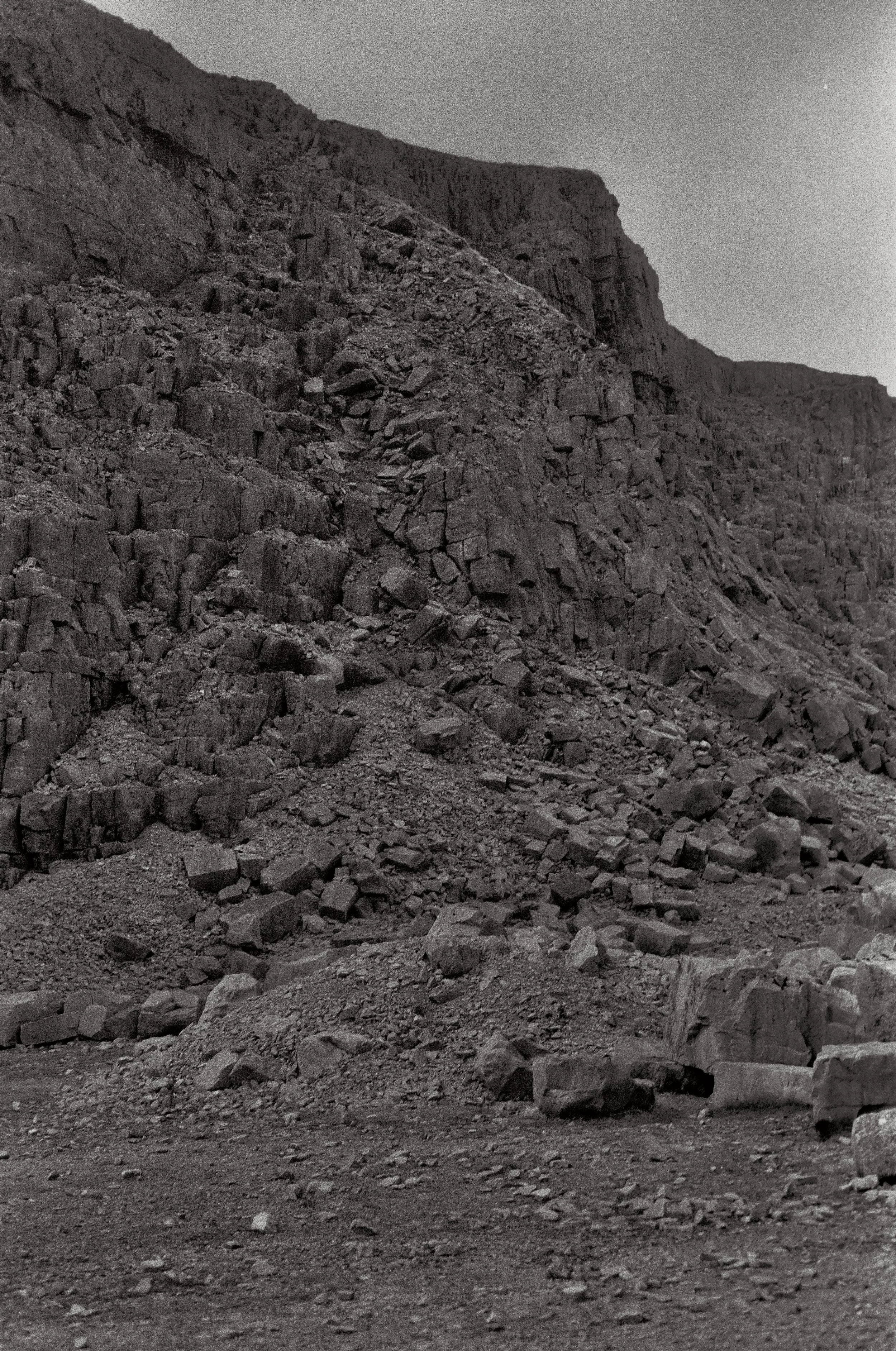
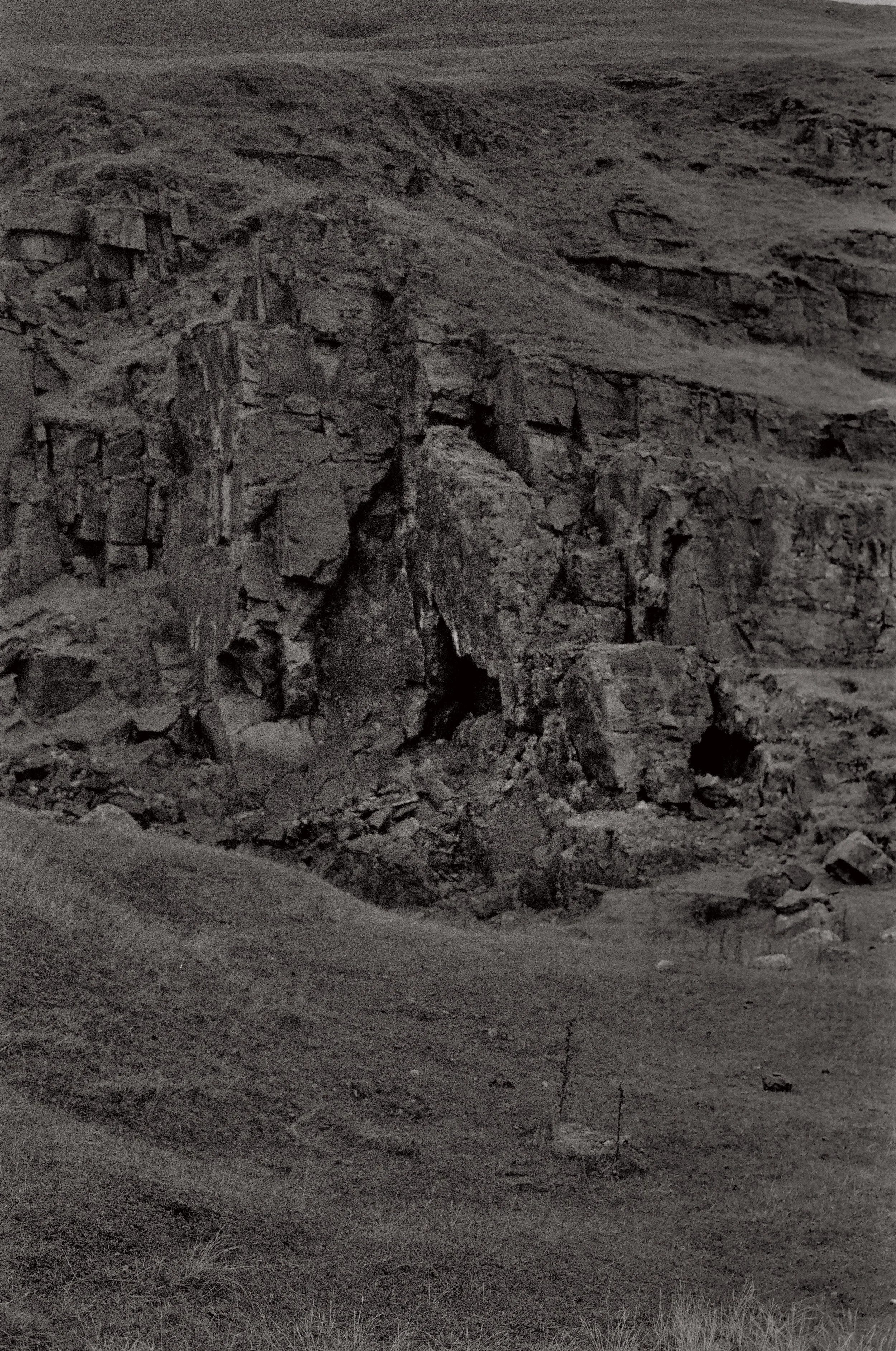
Fragments III , Black Mountains Quarry
Date: February 2024
Material: 35mm black and white film
Process: Hand-developed using seaweed-based developer
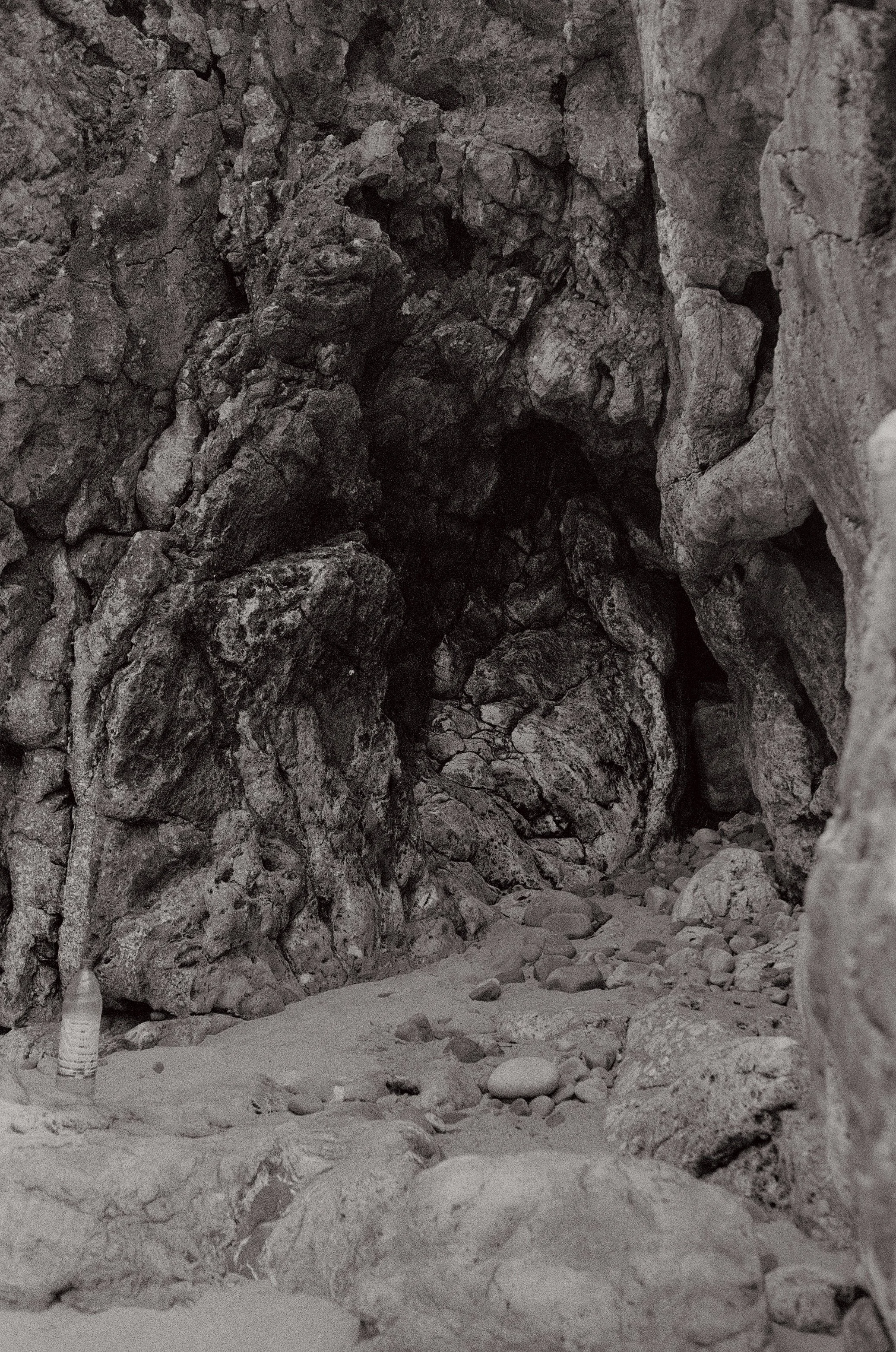
Fragments VI, Langland Bay
Date: Ocotober 2024
Material: 35mm black and white film
Process: Hand-developed using seaweed-based developer

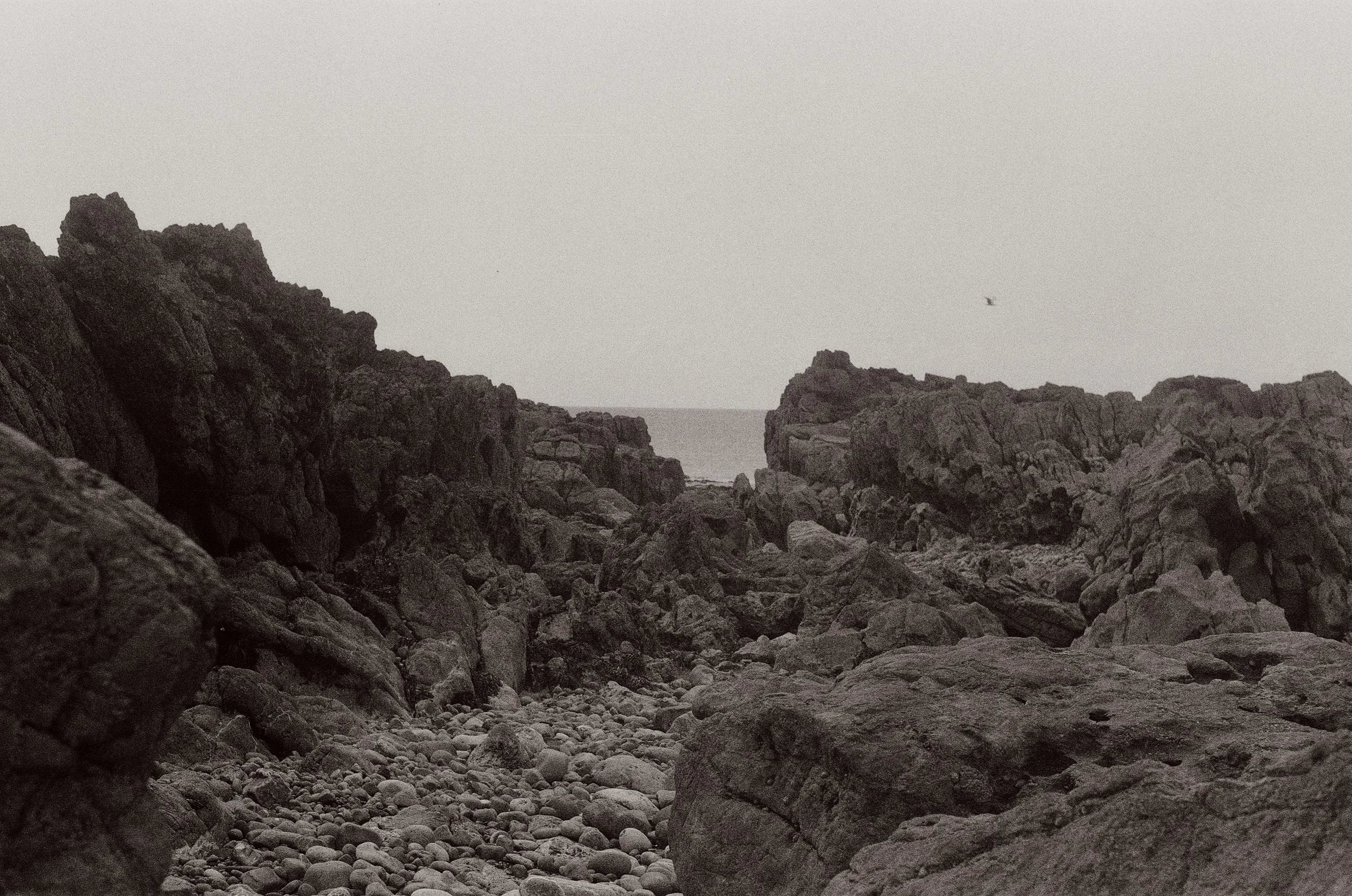
Fragments VIII, Caswell Bay
Date: November 2024
Material: 35mm black and white film
Process: Hand-developed using seaweed-based developer
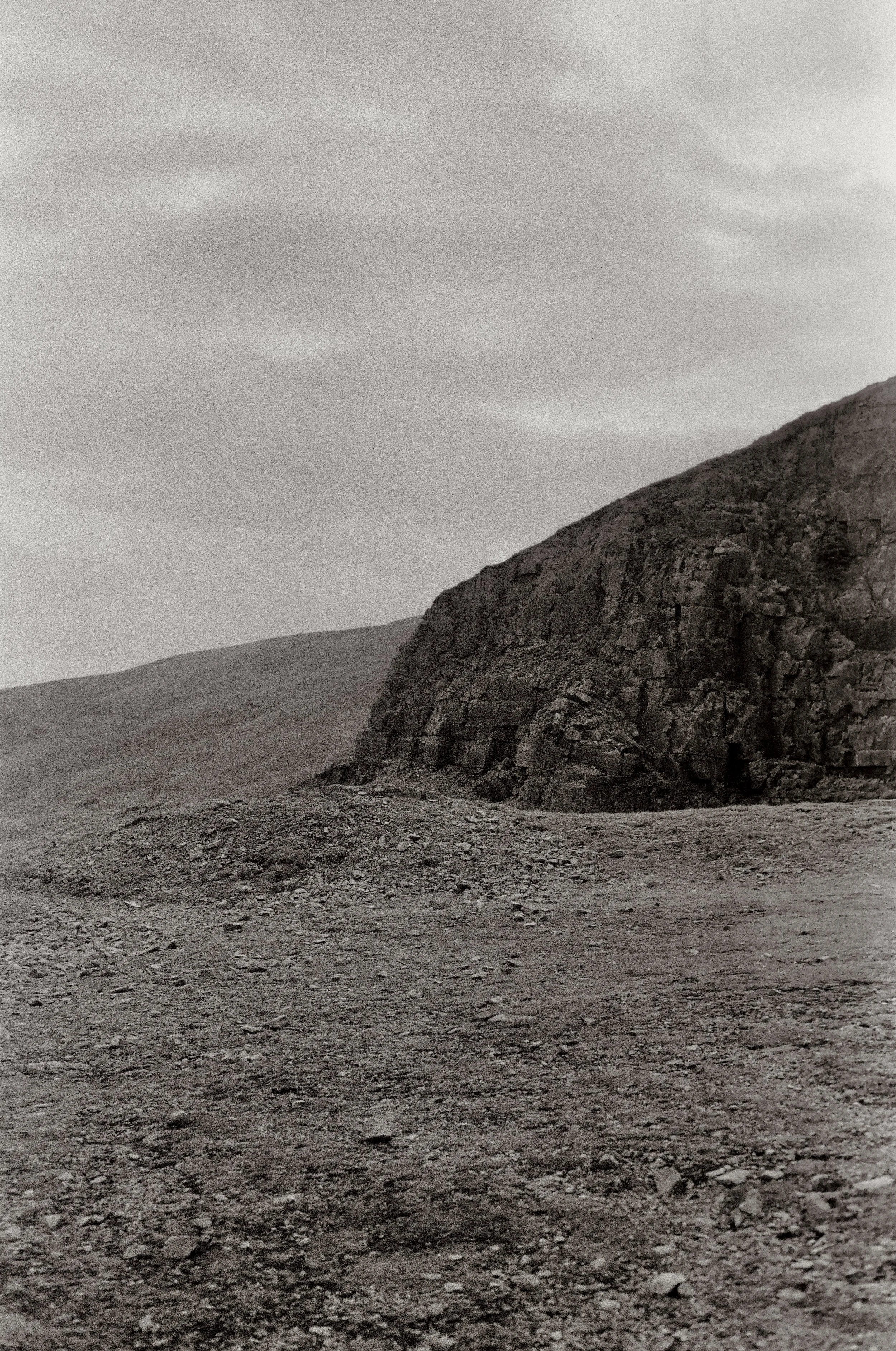
Fragments X, Bracelet Bay
Date: November 2024
Material: 35mm black and white film
Process: Hand-developed using seaweed-based developer
Fragments IX, Black Mountains
Date: June 2024
Material: 35mm black and white film
Process: Hand-developed using seaweed-based developer
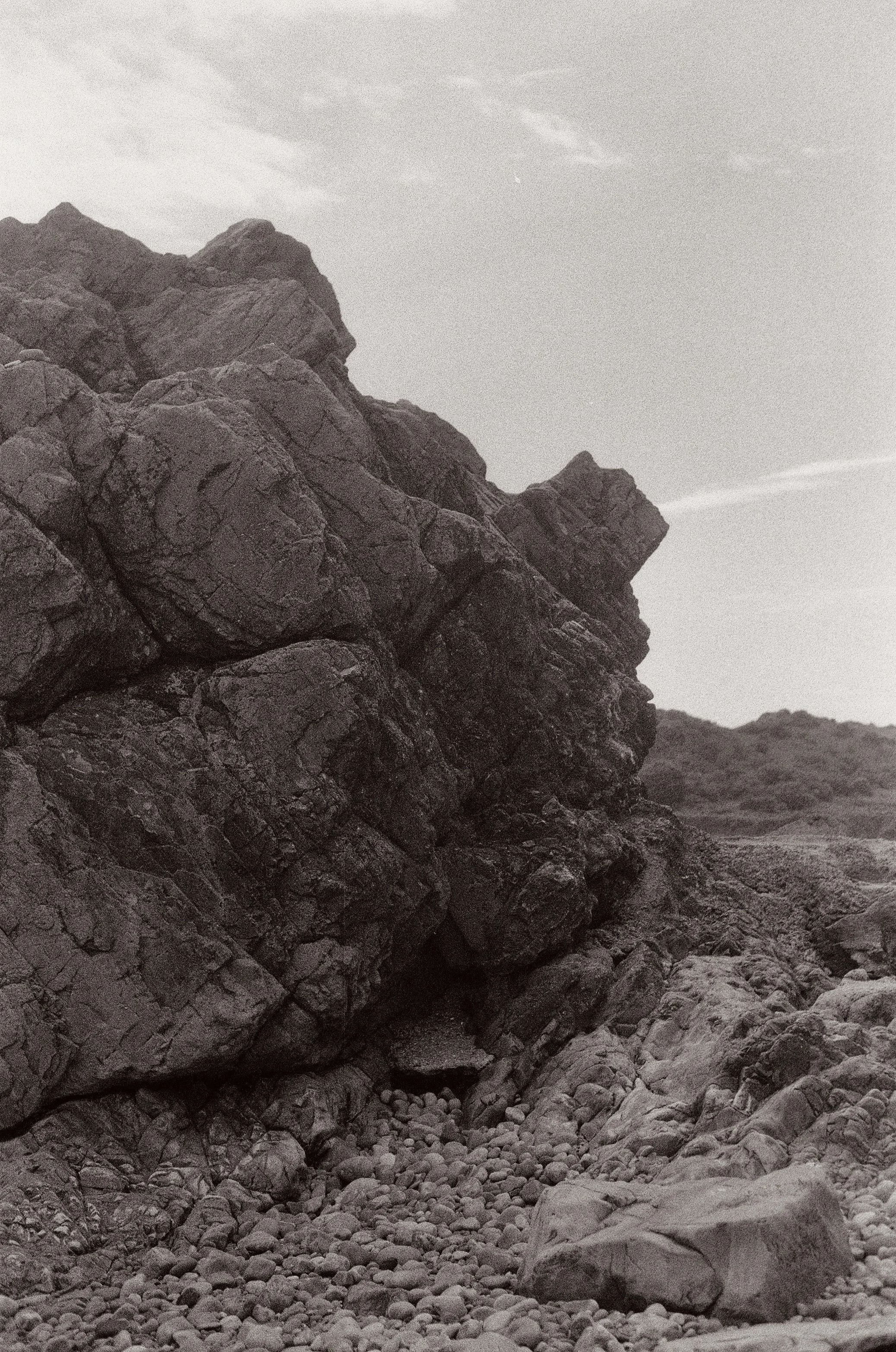
Fragments XVI Rotherslade Bay
Date: May 2024
Material: 35mm black and white film
Process: Hand-developed using seaweed-based developer
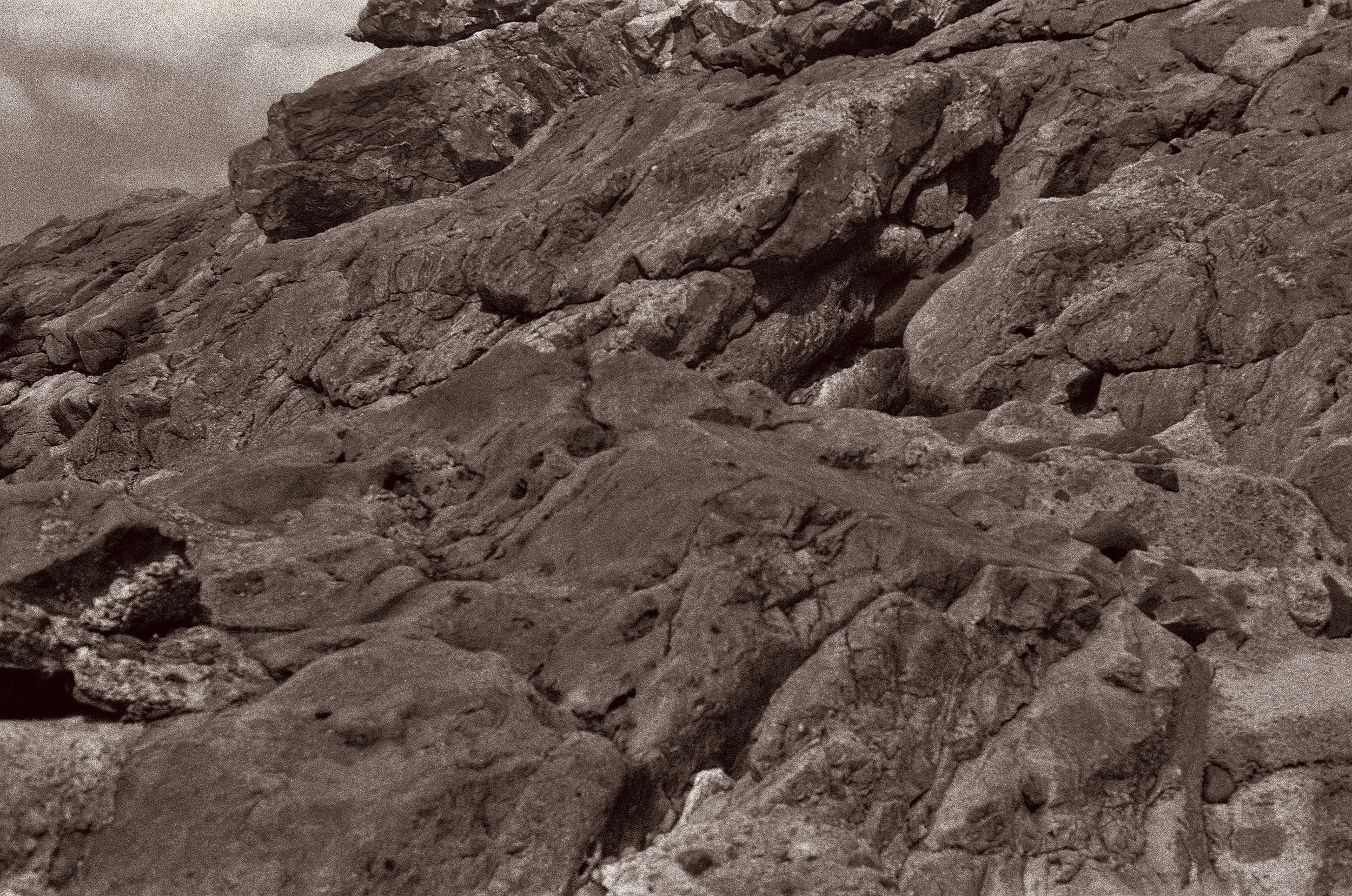
Fragments II, Caswell Bay
Date: April 2024
Material: 35mm black and white film
Process: Hand-developed using seaweed-based developer
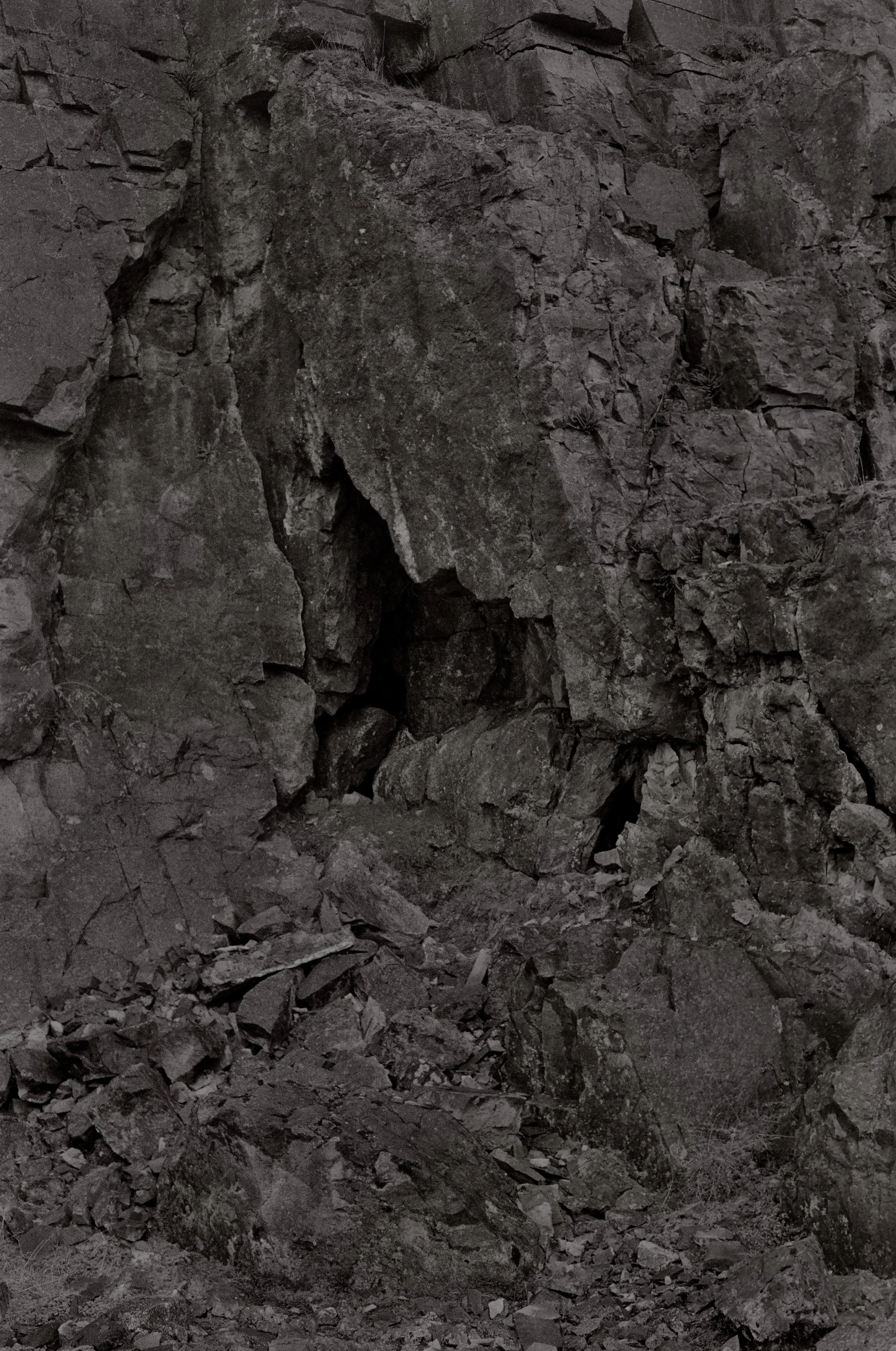
Fragments IV Gower Peninsula
Date: February 2024
Material: 35mm black and white film
Process: Hand-developed using seaweed-based developer
Fragments III, Black Mountains Quarry
Date: February 2024
Material: 35mm black and white film
Process: Hand-developed using seaweed-based developer
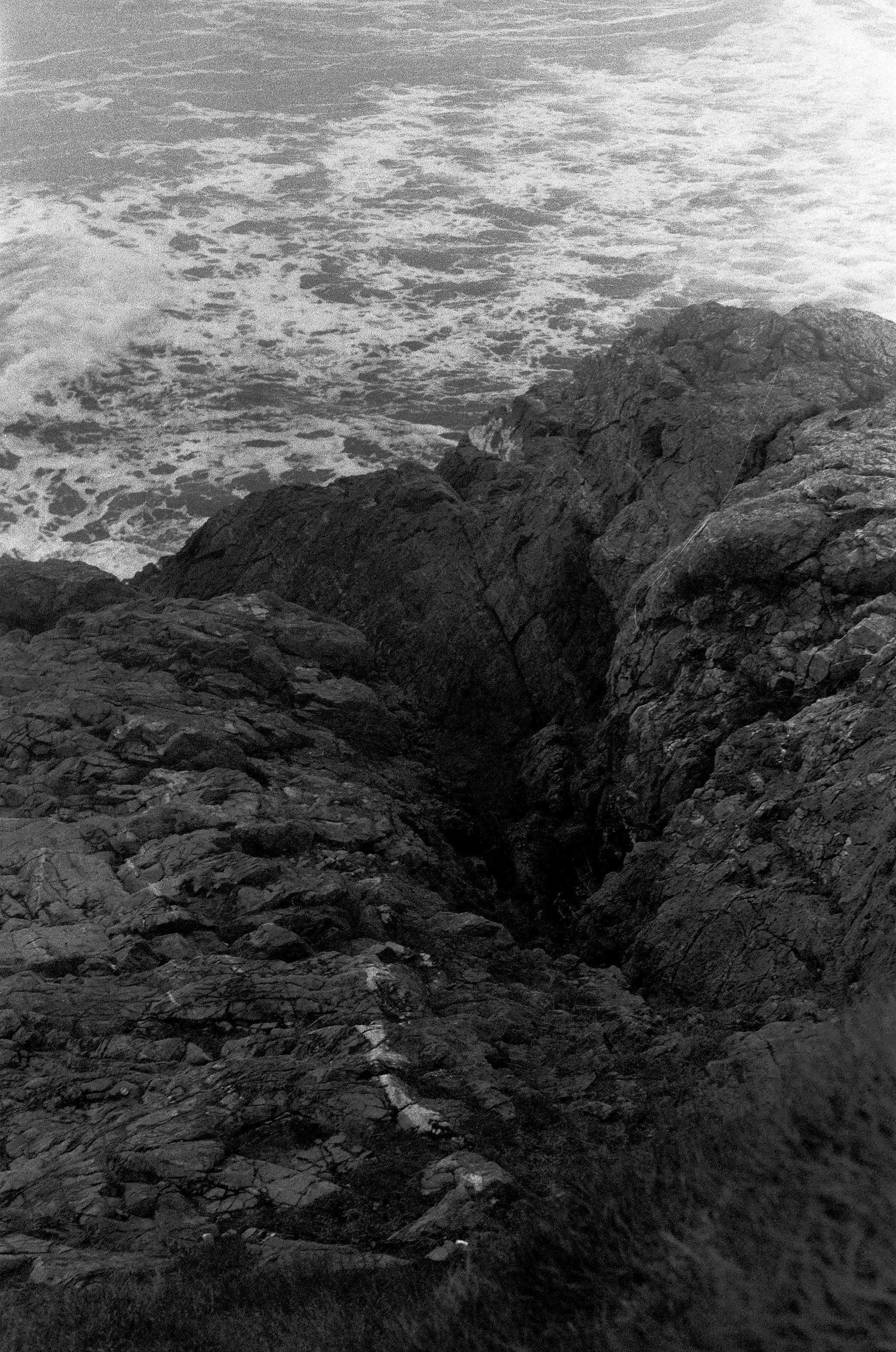
Fragments VII, Langland Bay
Date: Ocotober 2024
Material: 35mm black and white film
Process: Hand-developed using seaweed-based developer
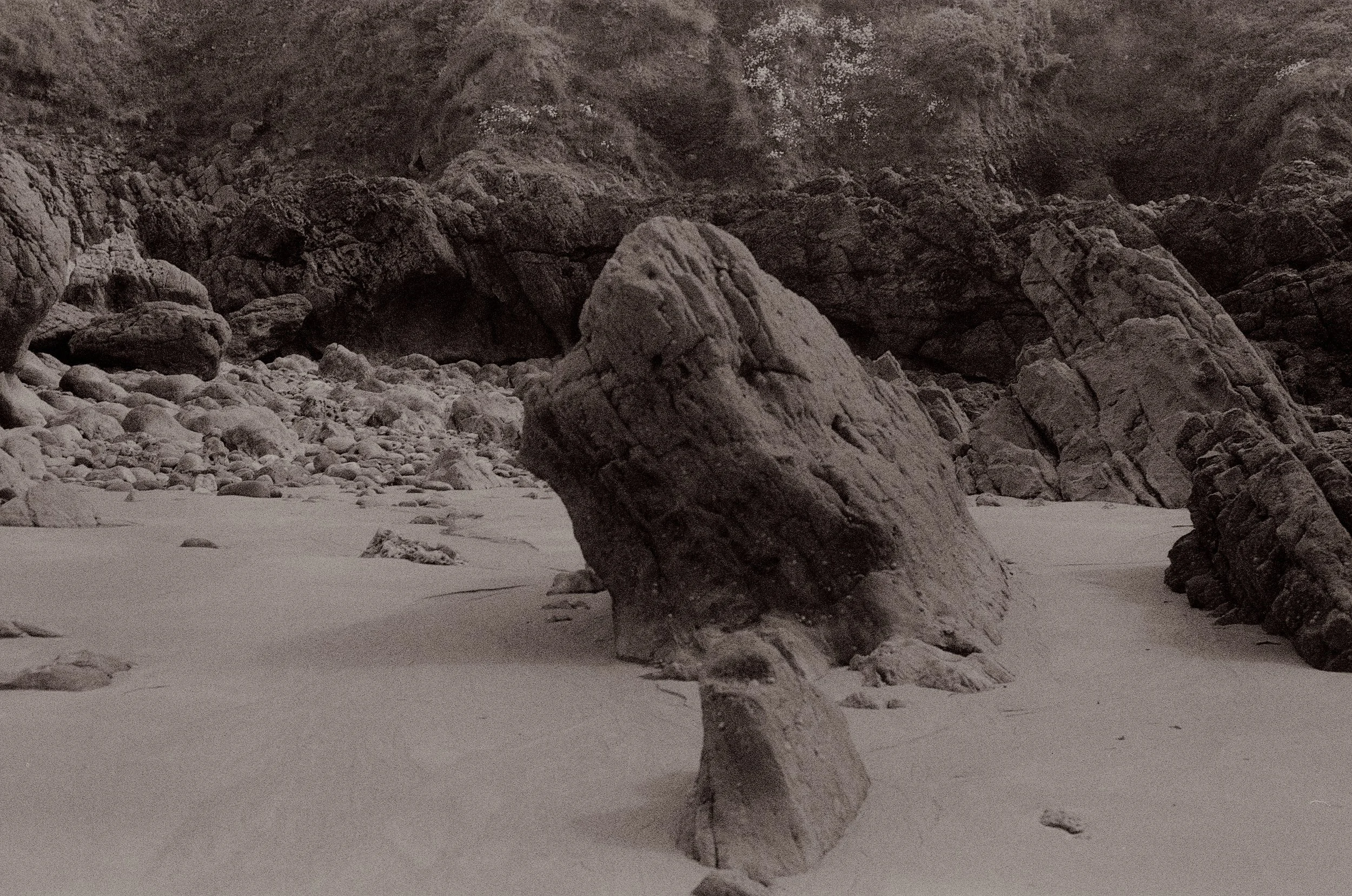
Fragments IX Rotherslade Bay
Date: Spetmeber 2024
Material: 35mm black and white film
Process: Hand-developed using seaweed-based developer
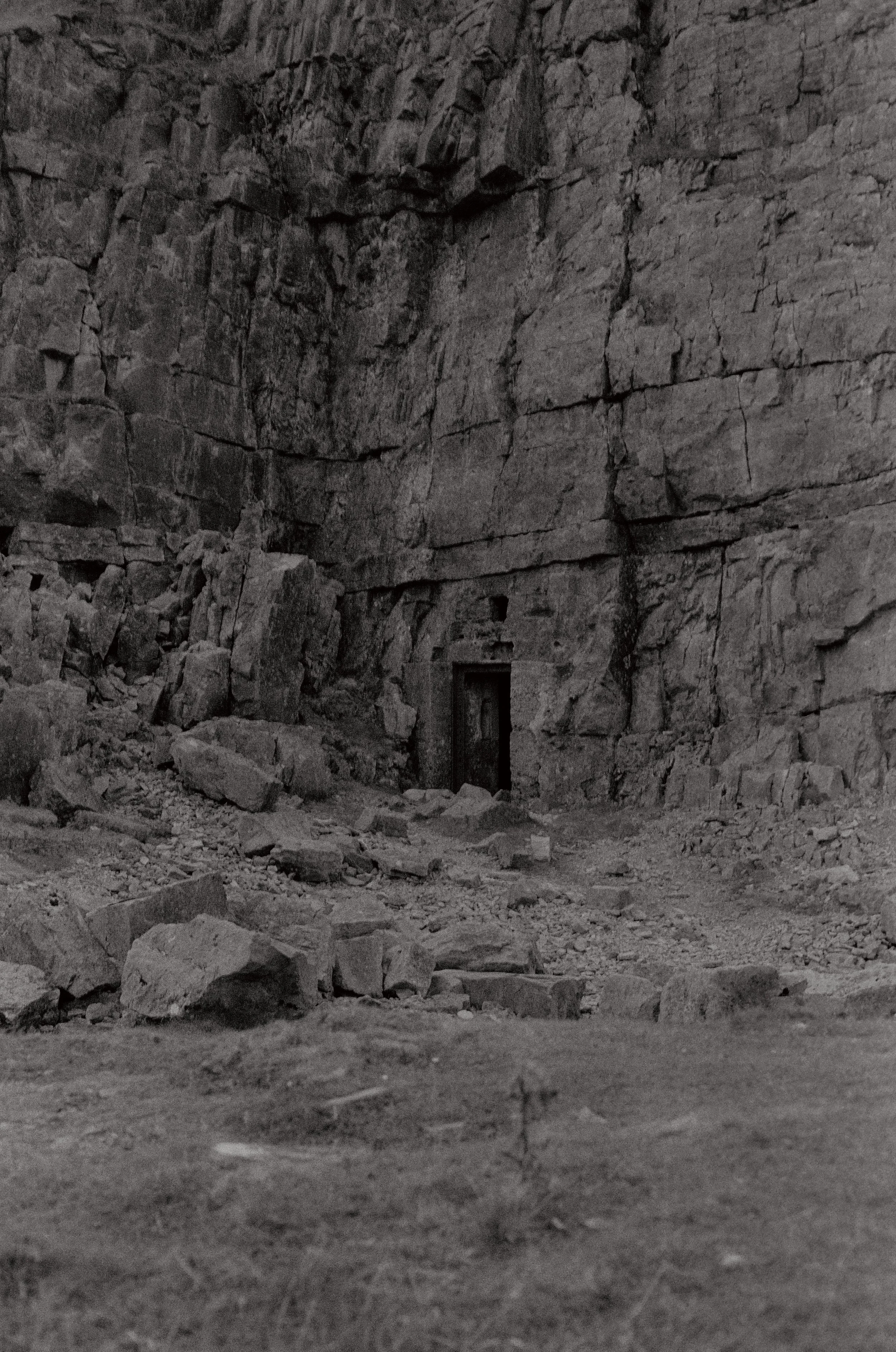
Fragments XII Black Mountains
Date: May 2024
Material: 35mm black and white film
Process: Hand-developed using seaweed-based developer
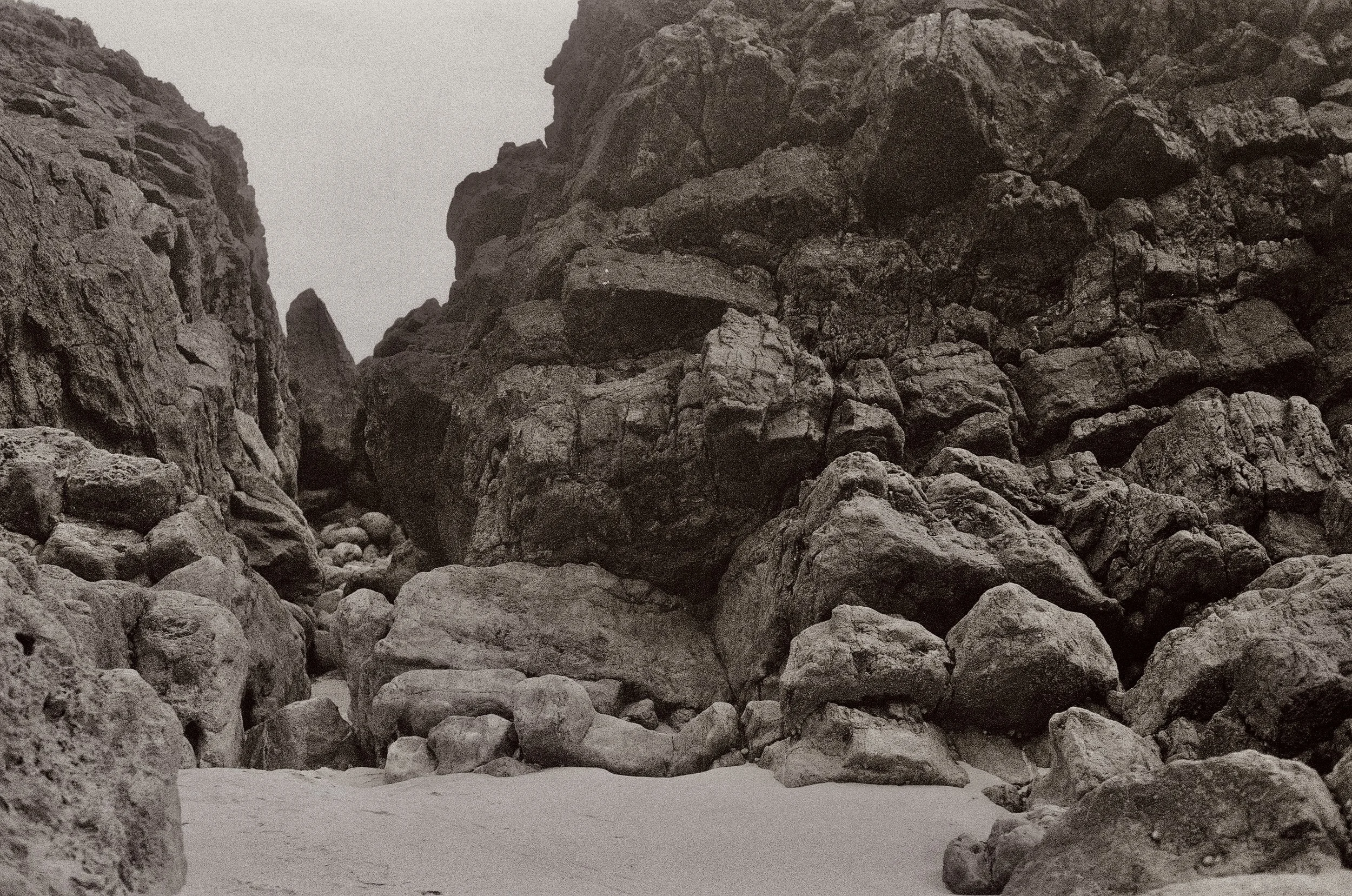
Fragments XV Rotherslade Bay
Date: May 2024
Material: 35mm black and white film
Process: Hand-developed using seaweed-based developer